Bariatric Surgery and Depression: What You Should Know
Does bariatric surgery cause depression, or ease it? See what the research shows and how Everself supports your mental health at every step.


Global leader in endoscopic weight loss, Triple-board-certified in obesity
You might be here because you’re worried that depression will disqualify you from a procedure. Or you’re already months post-op, losing weight steadily, and wondering why your mood hasn’t followed. Both questions deserve a straight answer instead of reassurance.
The relationship between bariatric surgery and depression runs in both directions. Studies show mood often improves in the first year or two after surgery. Other research points to long-term mental health risks that deserve honest attention.
This article explains both findings and what sits behind them. Everself would rather give you clear information than comfortable messaging. One note on terms: “bariatric surgery” here means traditional surgical procedures like gastric bypass and gastric sleeve, not endoscopic care (procedures done with a scope through the mouth, no incisions).
What You Need to Know
- Obesity and depression influence each other in both directions, so changes in one condition often affect the other.
- Numerous studies report meaningful improvement in depressive symptoms during the first one to two years after bariatric surgery.
- Bariatric surgery isn’t a treatment for depression. Improved mood is a possible secondary benefit, not the purpose of the procedure.
- Research has reported an elevated long-term risk of self-harm and suicide after bariatric surgery compared with the general population. Researchers don’t fully understand why.
- Treated, stable depression isn’t a contraindication to bariatric surgery, according to Dr. Christopher McGowan, an Everself physician and leader in endoscopic weight loss.
- A psychological evaluation exists to optimize your care, not to screen you out for having a mental health history.
- The strongest long-term outcomes combine a procedure with medical follow-up, nutrition counseling, movement, and behavioral support.
- ESG Stomach Tightening® is a one-time, non-surgical endoscopic procedure, and it doesn’t carry the same decades of long-term mental health data that traditional surgery does.
The Real Relationship Between Obesity and Depression
Obesity raises the risk of developing depression. Depression, in turn, contributes to weight gain. Researchers call this a bidirectional relationship, and it explains why these two conditions so often show up together.
Depression changes appetite, energy, and sleep. It pulls people away from movement and social contact. Some antidepressants also add weight, which deepens the frustration for anyone already struggling. This loop matters for your decision. Many patients arrive convinced the problem is willpower. Biology usually plays a much larger role than they’ve been told.
What’s driving the connection
Two sets of forces sit underneath this pattern, and both are real. Dr. McGowan points to biological mechanisms first:
- Chronic low-grade inflammation from excess fat tissue affects brain signaling and mood regulation.
- Hormonal dysregulation and insulin resistance change how your body manages energy, hunger, and stress.
- Altered gut-brain signaling shifts the chemical messages traveling between your digestive system and your brain.
- Neurotransmitter changes influence the serotonin and dopamine pathways tied to motivation and reward.
The psychosocial side carries just as much weight. Weight stigma wears people down over years. Social isolation, chronic pain, and reduced mobility all shrink the daily activities that normally protect mood. A National Library of Medicine review describes these overlapping biological and social pathways in detail.
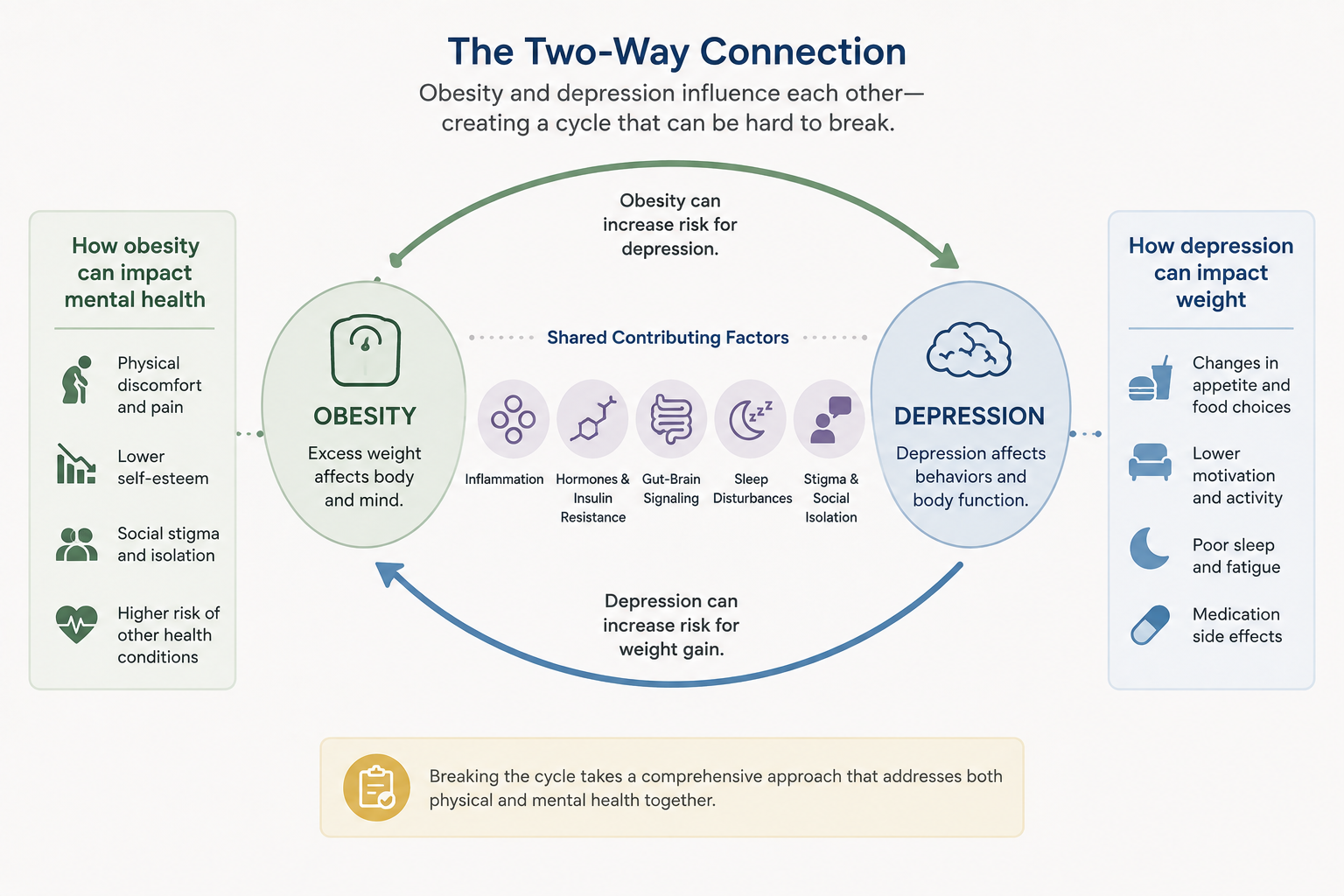
Understanding the two-way link between obesity and depression helps you plan for both.
Can Bariatric Surgery Improve Depression? Here’s What the Evidence Shows
Numerous studies have reported significant improvements in depressive symptoms during the first one to two years after bariatric surgery. That improvement is well documented, and it’s one of the reasons patients describe feeling like themselves again.
Several things drive it at once. Weight loss reduces joint pain and improves sleep. Mobility returns, physical health markers improve, and self-esteem often follows.
Quality of life tends to rise alongside those changes. People re-enter activities they’d quietly dropped. For many patients, that shift feels more meaningful than the number on the scale.
Results also vary by procedure and by person, and the differences between gastric sleeve and gastric bypass show up in restriction, recovery, and follow-up as much as in mood outcomes.
Why this isn’t the same as treating depression
Bariatric surgery isn’t a treatment for depression, and no reputable program presents it that way. Improved mood is a potential secondary benefit of better health, not the goal of the procedure.
This distinction protects you. Patients with clinical depression should continue appropriate psychiatric care before, during, and after any weight care plan. Stopping medication or therapy because you expect the procedure to handle it is a common and avoidable mistake.
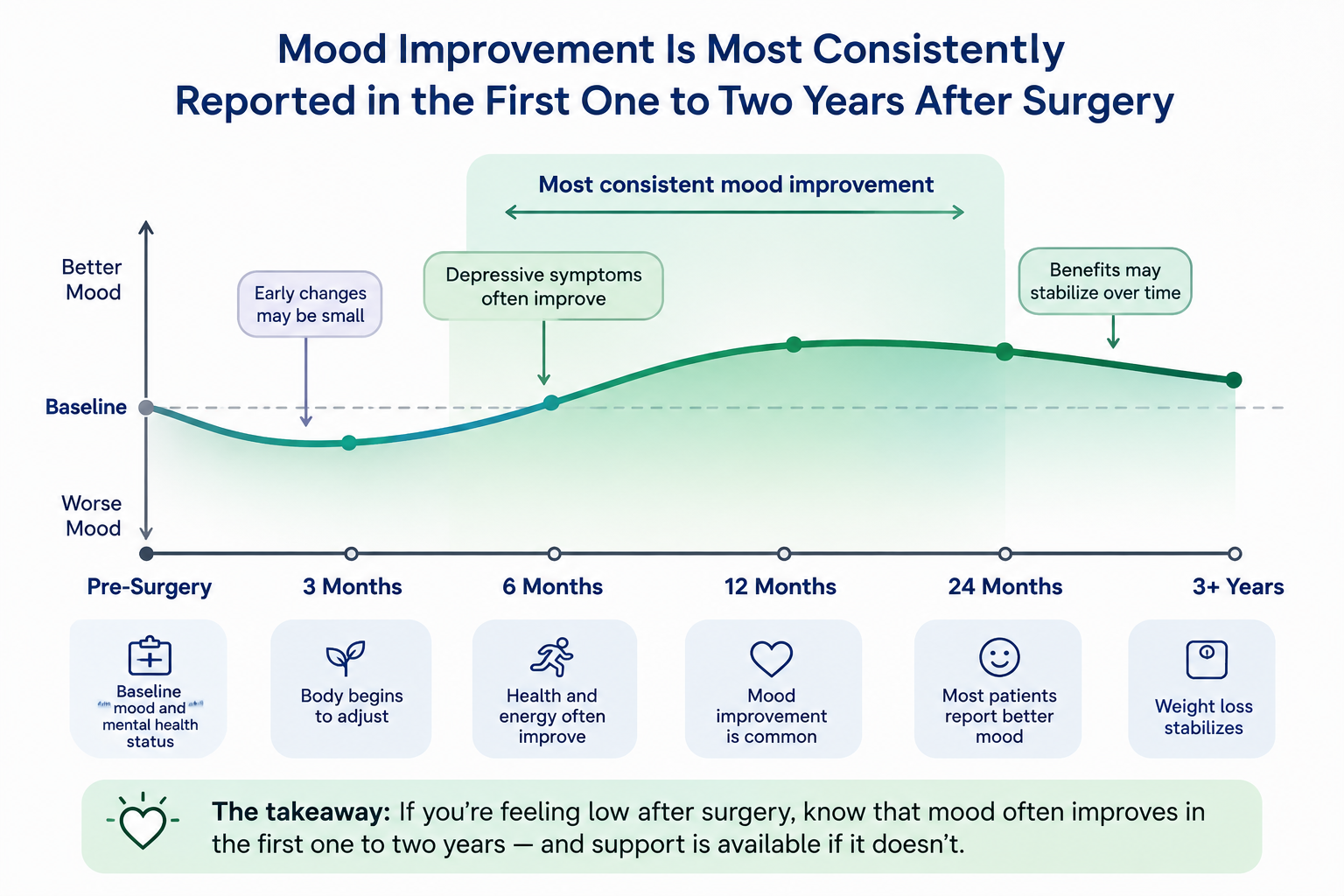
Mood improvement is most consistently reported in the first one to two years after surgery.
When Depression Lingers, or Returns, After Surgery
Some patients continue to experience depression after excellent weight loss. Others develop new mental health challenges they didn’t have before. Dr. McGowan sees this often enough that it’s part of what his team watches for throughout care, not just at the first visit.
He identifies several contributors that show up repeatedly:
- Unrealistic expectations set a high bar that weight loss alone can’t meet. Career, relationship, and self-worth concerns usually survive the scale.
- Relationship changes follow rapid physical change. Partners, friends, and family sometimes react in ways patients don’t anticipate.
- Body image concerns persist even after significant loss. Excess skin frustrates many people who expected to feel finished.
- Losing food as a coping mechanism leaves a real gap. Food soothed something, and the procedure removes that option before anything replaces it.
- Depression recurring on its own happens independent of weight, and for some people it’s a recurring condition with its own course, unrelated to the procedure itself.
- Post-surgical nutrient deficiencies in vitamin B12, folate, iron, and vitamin D can affect brain chemistry and mood on their own, which is one reason routine bloodwork stays part of long-term follow-up.
Weight regain can compound all of this, and when progress stalls, discouragement often arrives fast. Weight regain after gastric sleeve has specific causes and specific options behind it, and it helps to know both before deciding what’s next.
The Long-Term Mental Health Risks Worth Understanding
Studies have reported an increased long-term risk of self-harm and suicide after bariatric surgery compared with the general population. That finding is real, and you deserve to know it before you decide anything.
Researchers don’t fully understand the cause. The pattern likely reflects a mix of biological and psychosocial factors, including altered medication absorption, hormonal shifts, alcohol sensitivity, and unmet expectations. Researchers studying this question, including one national cohort study published on PubMed Central, have looked closely at how bariatric surgery relates to depression risk over time.
Here’s the part that gets lost in alarmist coverage. This data doesn’t show that surgery causes depression or suicide. It shows that people who choose bariatric surgery need ongoing mental health screening and support, more than they need to worry about which procedure they choose.
One more distinction matters. This long-term data comes from traditional surgical procedures. Endoscopic care like ESG doesn’t yet have equivalent long-term mental health research, so no one can claim it performs better on this measure.
Why a Psychological Evaluation Is Part of a Safe Weight Loss Plan

Ongoing low mood after weight loss is common and worth naming out loud.
Many people assume the pre-procedure psychological evaluation exists to reject them. It doesn’t. Its purpose is to identify conditions worth optimizing first and to confirm you’ll have support in place afterward.
Treated, stable depression isn’t a contraindication to bariatric surgery. Dr. McGowan is direct about this point. Hiding a mental health history creates far more risk than disclosing one.
The conversation covers your history, current treatment, coping patterns, and support system. It also sets expectations honestly, which reduces disappointment later. Think of it as care planning rather than a gate.
Non-surgical care doesn’t remove the psychological work involved in changing how you eat, and weighing ESG weight loss pros and cons honestly is part of that same readiness.
Talk with our team about what a readiness conversation looks like for non-surgical options. You’ll leave that call knowing where you stand, with no obligation attached.
What Long-Term Mental Health Support Should Look Like
Long-term success improves when a procedure sits inside a broader care plan. Dr. McGowan describes four pillars: medical follow-up, nutrition counseling, physical activity, and behavioral or psychological support. Any one of them alone tends to underperform.
Follow-up care is where a lot of programs fall short, even when the procedure itself goes well. This gap is where expectations drift, habits slip, and mood quietly declines. Support has to outlast the recovery period to matter.
The Everself Program adds 12 months of concierge weight care after your procedure. You work with physicians, nurse practitioners, registered nurses, registered dietitians, coaches, and care support who know your history. When something feels off, you already have someone to tell.
That structure supports the behavioral side too. Learning new coping strategies requires repetition and feedback, which are at the heart of building sustainable weight loss habits.
Know the Signs That Mean It’s Time to Reach Out
Mood shifts after a procedure aren’t unusual. Some warrant a conversation with your doctor, therapist, or care team. Watch for these signs:
- Low mood that persists for more than two weeks without lifting.
- Loss of interest in people, hobbies, or activities you used to enjoy.
- Withdrawal from friends, family, or your follow-up appointments.
- Sleep or appetite changes that don’t match your recovery plan.
- Increased alcohol use, which can affect people differently after bariatric procedures.
- Thoughts of harming yourself in any form.
None of this is a diagnosis, and one difficult week doesn’t mean something is wrong. Therapy, particularly cognitive behavioral therapy, and bariatric-specific support groups are well-studied tools for exactly this kind of adjustment, alongside whatever your care team recommends. Bring what you’re noticing to a professional who knows your history. Naming it early keeps small problems small.
If you’re in crisis or thinking about harming yourself, call or text 988 to reach the 988 Suicide and Crisis Lifeline. Support is available around the clock, and reaching out takes very little from you.
Making an Informed, Supported Decision
The relationship between bariatric surgery and depression moves in both directions. Mood improvement is common in the first years, though no one can promise it. Long-term risk data exists, and it argues for ongoing screening rather than fear. If you’re still weighing alternatives to weight loss surgery altogether, that same principle applies: the choice matters less than the support behind it.
Which procedure you choose matters less than the support surrounding it. Obesity is a chronic disease with both biological and psychological components, and that’s true whether you’re considering traditional surgery, ESG, or medication. If ESG vs VSG is still an open question for you, the differences show up more in recovery and long-term follow-up than in mental health outcomes specifically. A patient with strong follow-up care tends to do better than one with the perfect procedure and no team. That’s true for surgery, for endoscopic care, and for medication.
See whether ESG Stomach Tightening® is right for you. Our team will help you compare your options with the mental health side included from the start.
Sources
- Psychiatric Complications of Bariatric Surgery. (2024). StatPearls, National Library of Medicine. Found on: https://www.ncbi.nlm.nih.gov/books/NBK604208/
- The Complex Association Between Bariatric Surgery and Depression: A National Nested-Control Study. (2021). Obesity Surgery, via PubMed Central. Found on: https://www.ncbi.nlm.nih.gov/pmc/articles/PMC8041688/
- 988 Suicide and Crisis Lifeline. (Accessed 2026). 988 Lifeline. Found on: https://988lifeline.org