Signs of Dehydration After Gastric Bypass: What to Watch For
Learn the signs of dehydration after gastric bypass, from early symptoms to emergency warning signs, plus how to stay hydrated during recovery.
Global leader in endoscopic weight loss, Triple-board-certified in obesity
You take three sips, feel full, and wonder whether you’re drinking anywhere near enough. That kind of worry shows up for almost everyone in the first weeks after gastric bypass. Dehydration is common after this procedure and one of the most preventable problems you’ll face.
Below, you’ll find the early signs, the warning signs that need urgent care, and the small daily habits that keep you ahead of both. Fluid rules feel foreign at first, and that’s normal. This article is for general education; follow your own bariatric team’s post-op instructions first.
What You Need to Know
- Early dehydration usually looks like thirst, dry mouth, dark urine, dizziness, fatigue, headache, muscle cramps, and less frequent urination.
- Persistent vomiting, an inability to keep fluids down, fainting, confusion, and a rapid heart rate all call for prompt medical care.
- The American Society for Metabolic and Bariatric Surgery lists 64 ounces of fluid or more per day as a standard goal after weight loss surgery.
- Pale straw-colored urine is the simplest daily self-check, and dark amber urine is your earliest cue to sip more.
- Steady sipping all day works better than drinking large amounts at once, because your pouch holds only an ounce or two early on.
- Hydration gets easier as your body adapts, so an early struggle doesn’t mean your recovery has gone wrong.
Why Gastric Bypass Makes Hydration Trickier
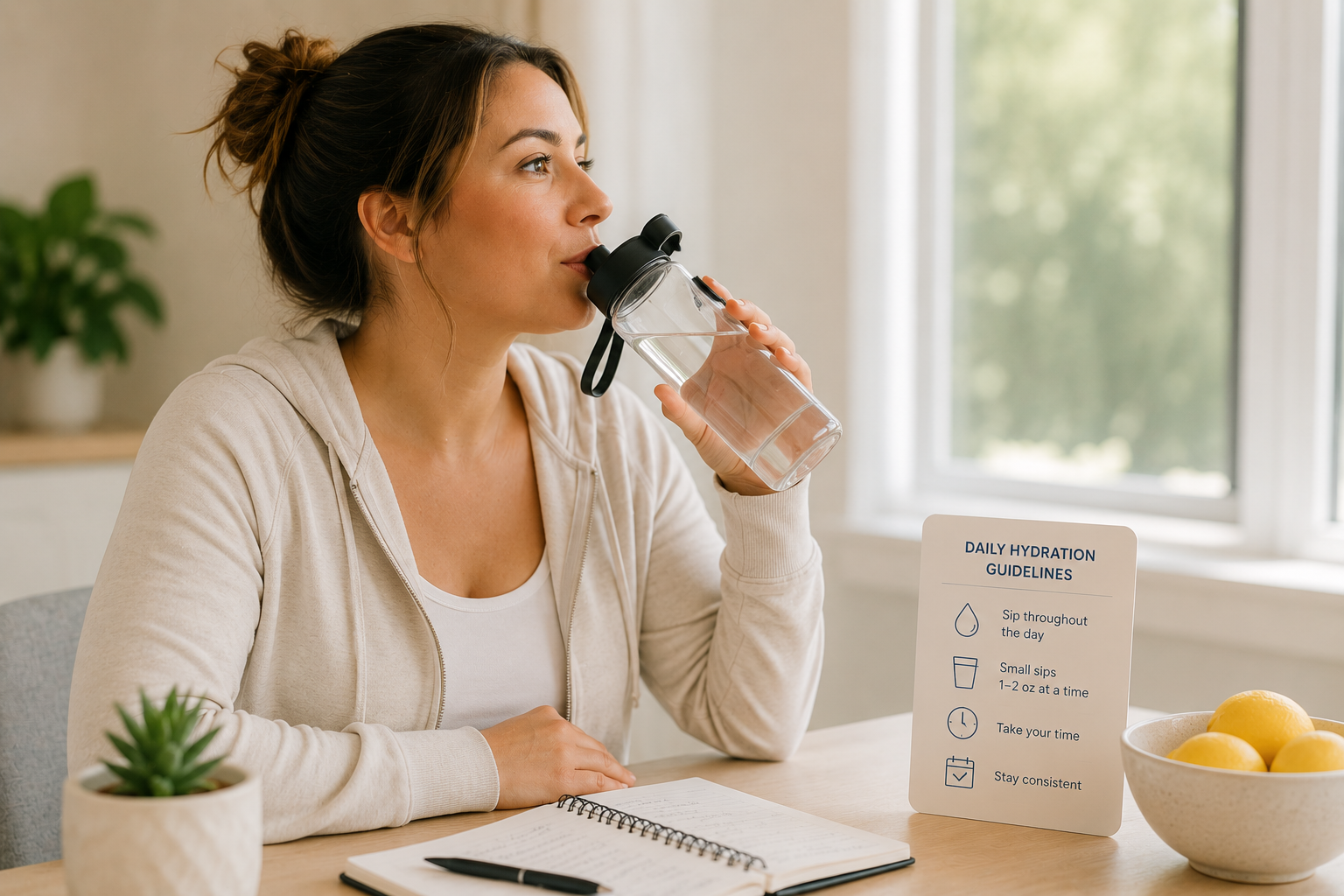
Understanding how your new anatomy handles fluids makes daily hydration far less stressful.
Gastric bypass changes how much you can drink and how fast you can drink it. Your pouch is a fraction of its former size, and fluids move through rerouted anatomy. Early nausea and a much smaller appetite make the daily goal feel even further away.
How your smaller stomach pouch changes the rules
Right after gastric bypass, your pouch holds roughly an ounce or two. A few sips fill it, and drinking a full glass simply isn’t possible anymore.
Most bariatric teams also ask patients to keep fluids separate from meals, often by about 30 minutes on either side. Liquid takes up space your pouch needs for protein. Drinking with food can also push a meal through the pouch too quickly and trigger uncomfortable symptoms.
Protecting your nutrition this way does narrow your drinking window. You end up sipping in the gaps between meals, and that takes planning in the early weeks.
Why thirst shows up later than it should
Thirst is a lagging signal rather than an early warning. By the time you notice it, you’ve often lost more fluid than you expected.
Early recovery widens that gap. Nausea, pain medication, and a quiet appetite all dull your usual cues. Sipping on a schedule keeps you ahead of a signal you can’t fully trust yet.
Your procedure matters too. Researchers reviewed 256,817 bariatric patients in a national database study published in Surgery for Obesity and Related Diseases. More gastric bypass patients than sleeve patients needed outpatient treatment for dehydration within 30 days. Dehydration after gastric sleeve happens often as well, though bypass patients in that analysis needed help more frequently.
Read that as an association across a very large group, not a prediction about your recovery. The differences in daily rules and healing time become clearer when you compare gastric sleeve and gastric bypass.
The Early Signs of Dehydration After Gastric Bypass
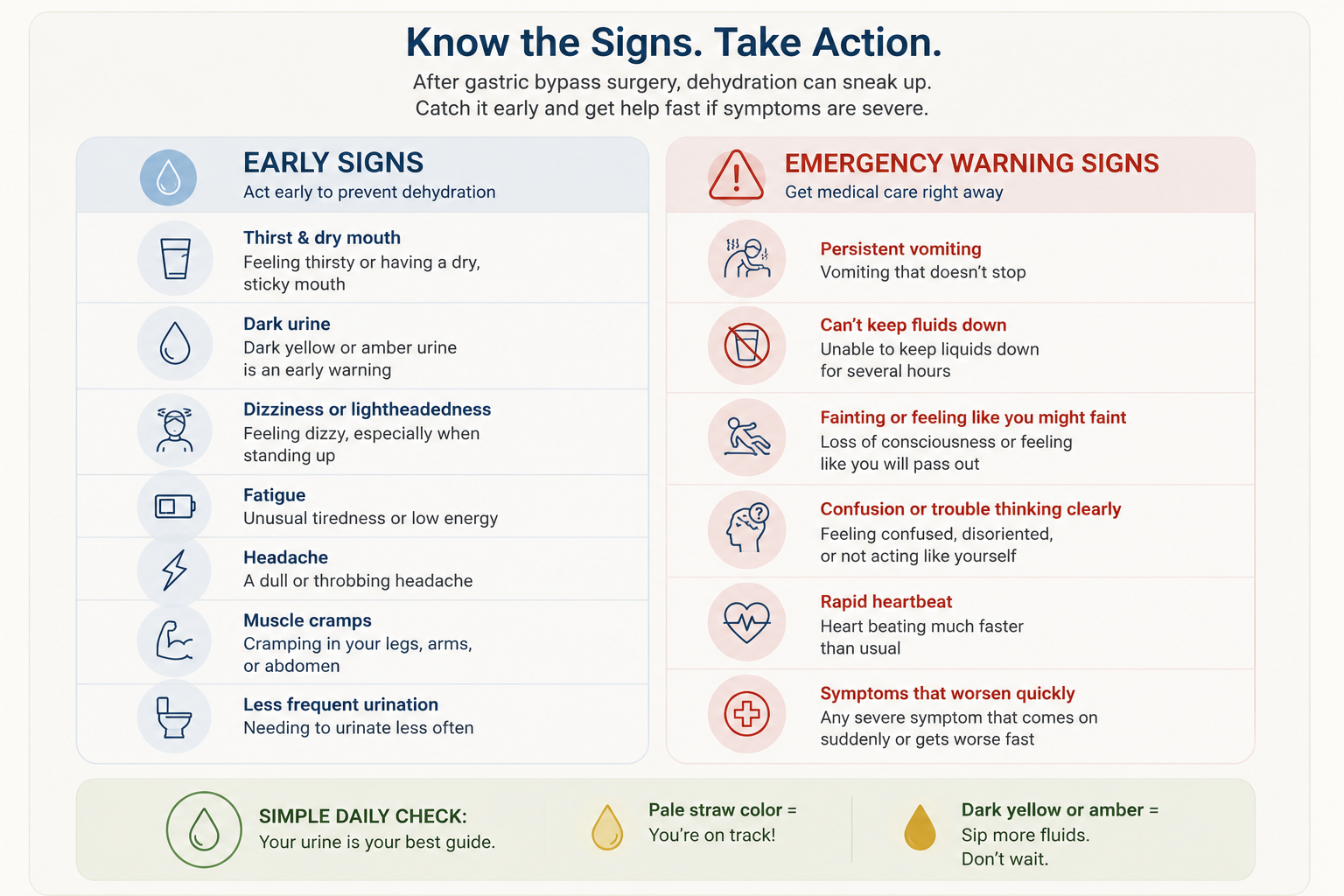
Catching the early signs of dehydration after gastric bypass turns a scary moment into a simple fix.
The early signs of dehydration after gastric bypass sneak up because they feel so ordinary. The symptoms of dehydration after gastric bypass tend to build over a day or two rather than arriving all at once.
Dr. McGowan points to the same cluster of symptoms patients report most often:
- Thirst and a dry, sticky mouth usually arrive first.
- Urine turns dark yellow or amber instead of pale.
- Dizziness or lightheadedness hits when you stand up quickly.
- Fatigue settles in and doesn’t lift after rest.
- Headaches build through the afternoon or evening.
- Muscle cramps show up in your legs, feet, or hands.
- You visit the bathroom noticeably less often than usual.
Noticing one or two of these occasionally is common, and steady fluids usually correct them. It doesn’t mean your recovery has gone off course.
What dark urine and thirst are telling you
Urine color gives you the fastest daily self-check you have. Pale straw or light yellow means you’re keeping up. Dark yellow or amber means you’ve fallen behind and should sip more over the next few hours.
One caveat helps here. Bariatric multivitamins with B vitamins can turn urine bright, almost neon yellow. The supplement causes that color shift, so judge hydration by how dark the urine looks rather than how vivid it is.
Thirst deserves attention the moment you feel it. Treat it as a prompt to sip consistently for the rest of the day, not as a reason to gulp a large glass at once.
Fatigue, headaches, and muscle cramps
These three symptoms usually travel together because you lose electrolytes along with fluid. Sodium, potassium, and magnesium all help your muscles and nerves work properly.
Most patients feel better within a few hours of regular sipping. Energy returns, the headache eases, and cramping settles.
If those symptoms stick around into the next day despite steady fluids, call your bariatric team. Persistent fatigue and cramping can point to an electrolyte gap that needs guidance rather than more water.
When Dehydration Becomes a Medical Emergency
A different set of symptoms means you’ve moved past self-management. Dr. McGowan flags these as reasons to seek help right away:
- You’re vomiting repeatedly and it isn’t settling.
- You can’t keep any fluids down at all.
- You faint or come close to fainting.
- You feel confused, foggy, or unusually disoriented.
- Your heart races or pounds while you’re resting.
Contact your bariatric team immediately if any of these appear. Fainting, confusion, and an inability to keep fluids down need emergency care rather than a wait-and-see approach.
None of this means something has gone badly wrong. It means your body needs fluids faster than you can drink them, and an IV usually solves that quickly.
Simple Habits That Keep You Ahead of It
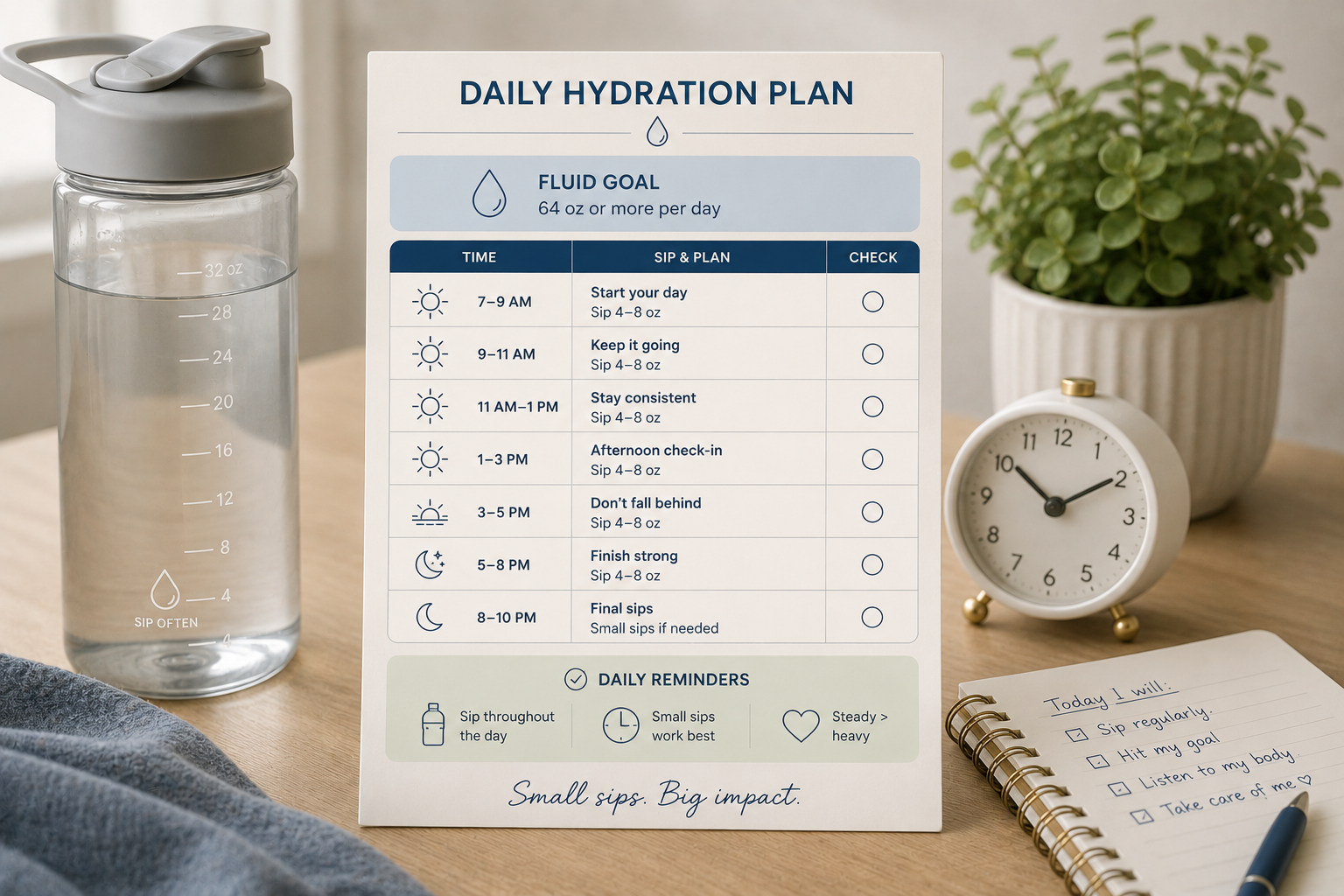
A steady daily rhythm protects your hydration better than any single big effort.
Prevention beats treatment here, and Dr. McGowan emphasizes that point with every patient. Build these habits into your routine from the first week home.
Build a sipping rhythm, not a race to the finish
Carry a bottle everywhere and take small sips every few minutes. This rhythm matters more than any number on the bottle.
Avoid gulping, even when you feel behind. Large volumes overwhelm a small pouch and often trigger nausea, which sets you back further. Ice chips, sugar-free popsicles, or warm decaf herbal tea help when plain water feels unappealing.
The ASMBS lists 64 ounces of fluid or more each day as a general goal after weight loss surgery. Build toward that number as you tolerate it, and follow the specific target your own team gives you. Keep fluids separate from meals exactly as they’ve instructed.
Phone reminders help more than most people expect in the first month. Set one every hour, and the habit becomes automatic within a few weeks.
Beverages that work against you
Sugary drinks pull fluid into your intestine and can trigger dumping syndrome, which leaves you more depleted than before. Juice and regular sports drinks fall into this group.
Carbonated beverages cause gas and pressure in a healing pouch, so most teams ask patients to skip them early on. Excess caffeine and alcohol both act as diuretics, and alcohol hits differently after gastric bypass because you absorb it faster.
Water, broth, sugar-free electrolyte drinks, and decaf tea do the work without the side effects.
When to Reach Out to Your Bariatric Team
Call your team when you’ve struggled to reach your fluid goal for more than a day or two. It’s a normal reason to check in, not an overreaction.
Also call if nausea keeps blocking fluids, if dark urine doesn’t clear after a focused day of sipping, or if fatigue and cramping persist. Many programs offer outpatient IV fluids, which take an hour and prevent a much harder day later. Go straight to emergency care for fainting, confusion, or an inability to keep anything down.
Dr. McGowan reassures patients that hydration nearly always gets easier as the body adapts. Your pouch tolerates more, nausea fades, and sipping stops feeling like a full-time job. A difficult first few weeks says nothing about how your recovery will go.
If You’re Still Deciding on a Procedure
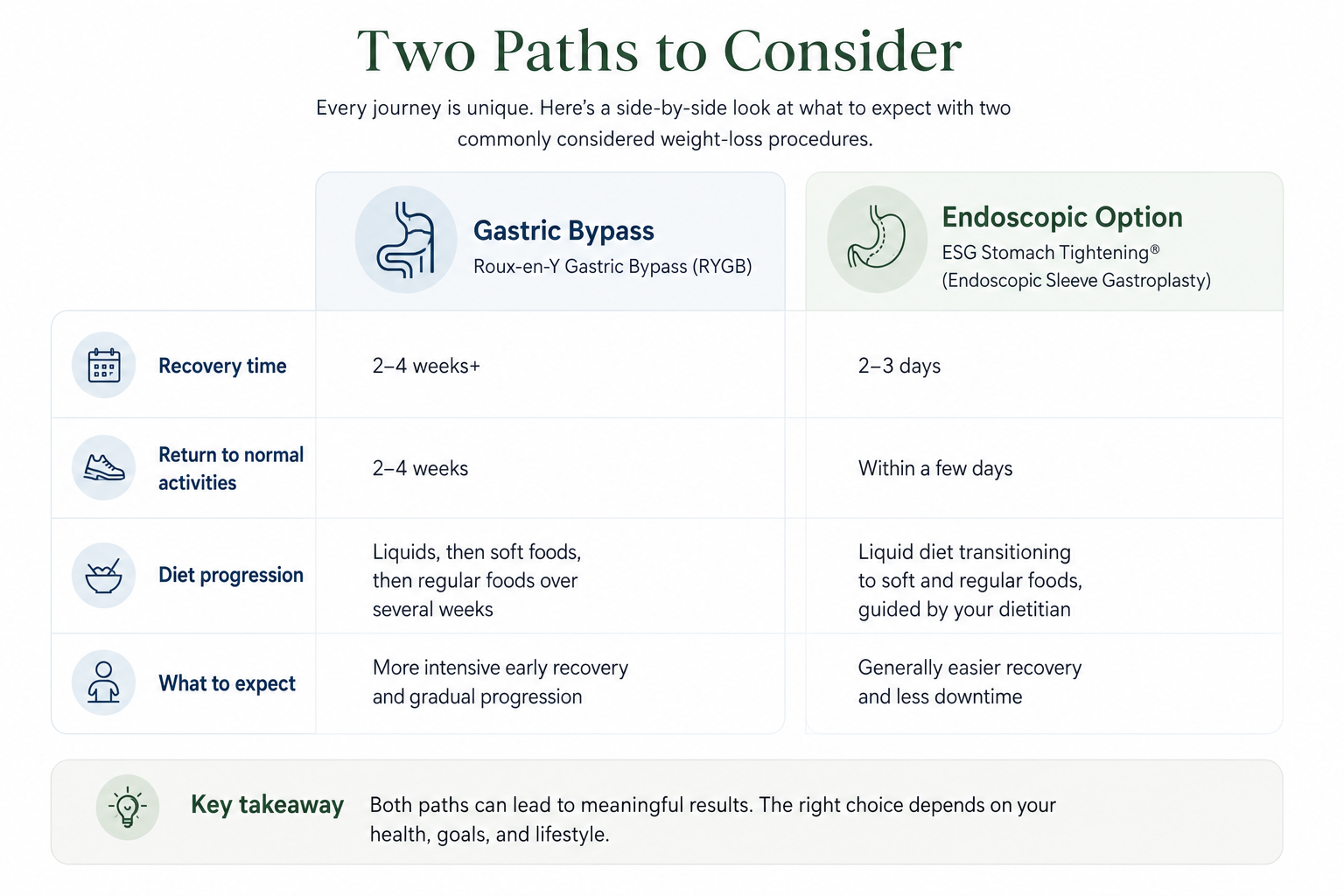
Recovery demands differ between procedures, which matters if you’re still deciding.
Comparing the safest weight loss surgery options helps you see how recovery time, daily rules, and long-term support differ before you commit. One non-surgical path worth knowing about is ESG Stomach Tightening®, a one-time, non-surgical endoscopic procedure. Doctors reshape the stomach with internal sutures, so nothing gets removed and nothing gets rerouted, and stomach capacity drops, though not as drastically as it does with gastric bypass. A gastric balloon offers a similar non-surgical, reversible option for patients not ready for a longer-term procedure.
Recovery reflects that difference: most ESG patients return to normal activity within a few days, and hydration usually feels more manageable from the start. Dehydration is still possible either way, so fluid goals still matter. Everself provides every patient with complimentary IV hydration the day after an ESG procedure, built specifically to prevent the early fluid gap that trips up so many patients.
If you want to know whether a non-surgical path fits your health and your schedule, you can talk with the Everself team about your options.
What to Remember as You Recover
Dehydration after gastric bypass is common, explainable, and preventable with daily attention. Thirst, dark urine, dizziness, and fatigue give you early warning. Persistent vomiting, fainting, confusion, and a racing heart call for immediate care.
Sip steadily, keep a bottle within reach, and stop waiting until you feel thirsty. Those three habits carry most of the weight.
The first weeks ask the most of you, and they don’t last. Sipping on schedule stops feeling like homework and becomes just another part of your day.
Sources
Dehydration risk factors and impact after bariatric surgery: an analysis using a national database. (2019). Surgery for Obesity and Related Diseases. Found on: https://pubmed.ncbi.nlm.nih.gov/31601534/
Life After Bariatric Surgery. (2021). American Society for Metabolic and Bariatric Surgery. Found on: https://asmbs.org/patients/life-after-bariatric-surgery/
Dietary Guidelines After Bariatric Surgery. UCSF Health. Found on: https://www.ucsfhealth.org/health-articles/dietary-guidelines-after-bariatric-surgery