Weight Set Point Theory: Can You Change Your Set Point?
Weight set point theory explains why weight often returns after dieting. See what the research says and which options may help.


Global leader in endoscopic weight loss, Triple-board-certified in obesity
Weight set point theory may help explain why your body seems to resist weight loss, even when you’re following a consistent plan. The theory suggests your body uses biological signals, including hunger hormones and how you expend energy, to defend a familiar weight range. However, researchers are still studying how these mechanisms work and whether people have a fixed set point.
You may recognize the pattern. You lose weight, only to find your hunger increases and the scale creeps right back up. It isn’t simply a failure of willpower, and research suggests biological changes after weight loss can make it harder to maintain those results.
At Everself, we understand how discouraging that experience can be. Below, we’ll explore what science says about weight set point theory, why hunger can return after dieting or stopping GLP-1 medications, and how different weight management approaches may help.
Your Weight Set Point in Brief
- Weight set point theory is when the brain defends a weight range by adjusting hunger and energy use, but there is no test that can measure a person’s set point.
- The most direct evidence for a defended set point comes from animal studies, so researchers treat it as a useful example rather than a proven fact.
- In a 2011 study of 50 adults, several hormone changes associated with weight loss persisted one year after a 10-week diet, including higher levels of ghrelin (the hunger hormone) and lower levels of hormones that promote fullness.
- In the STEP 1 trial extension, a follow-up study of a GLP-1 weight loss medication, people who stopped semaglutide regained about two-thirds of the weight they’d lost within one year.
- No method has been proven to lower a set point in people, though the rodent research suggests bariatric surgery may lower the weight the body defends.
- In a smaller study, the fullness hormones GLP-1 and PYY rose after ESG and food left the stomach more slowly.
- ESG is a one-time, non-surgical procedure with average total weight loss of about 20% at one year, paired with 12 months of care through The Everself Program.
What Your Weight Set Point Is, and What It Isn’t
Many adults’ weight stays within a fairly narrow range for long stretches, even though what they eat changes from day to day. Weight set point theory explains this steadiness with a control system. Your brain tracks how much energy your body stores and works to keep it within a familiar range.
The hypothalamus, a region at the base of the brain, pulls together hormone and nerve signals from the gut, fat tissue, and other organs to adjust appetite and energy use. Leptin reports your long-term energy stores, ghrelin raises hunger, and GLP-1 and PYY help you feel full.
Think of it like a thermostat. When the room cools below the setting, the heat kicks on. Under set point weight theory, your brain is the thermostat, and rising hunger and lower energy use are the heat.
The comparison has limits, though. You can read a thermostat’s setting, but you can’t read your body’s weight set point. No blood test, scan, or calculator can tell you what it is, so any number you may find online is only a guess. A defended weight also isn’t necessarily one permanent number. It can shift over time with biological, environmental, behavioral, and medical factors.
Set point or settling point
Not every researcher agrees that the body naturally defends a fixed target. A review in Disease Models and Mechanisms compared two leading explanations. The set point model describes an active feedback loop, likely run by the brain, that links stored fat to how much you eat and burn.
The settling point model sees weight as more passive. Your weight settles where your genes, food environment, activity, and routines balance out, then shifts when those inputs change.
The review’s authors argue that each model explains something the other misses. The set point model fits the biology of hunger, but it can’t explain why weight rose across so many countries after the 1980s. The settling point model accounts better for food, activity, and social influences, but it struggles with the genetic and hormonal evidence. The authors say neither model is enough on its own. The table below puts the two models side by side:
| Feature | Set Point Model | Settling Point Model |
|---|---|---|
| Core Mechanism | Active regulation. An internal biological feedback loop defends a specific target weight. | Passive equilibrium. Weight stabilizes naturally where opposing forces balance out. |
| Primary Driver | Biology & Genetics. The brain (specifically the hypothalamus) acts like a thermostat. | Environment & Habits. Your food environment, daily routines, and activity levels dictate the outcome. |
| Response to Weight Loss | Aggressive pushback. The body actively lowers metabolism and increases hunger hormones to force weight back up. | Adjusted baseline. Lowering calorie intake reduces overall mass, which naturally lowers total energy expenditure until the body reaches a new baseline. |
| Scientific Visual Analogy | A home thermostat. If the temperature drops below the target, the heater automatically kicks on until it reaches the set point. | A lake or reservoir. The water level (fat stores) simply settles at whatever point the inflow (eating) perfectly matches the outflow (burning). |
| Explaining the Obesity Epidemic | Struggles to explain it. If human bodies strictly defend a fixed biological weight, population-wide averages shouldn’t rise rapidly. | Easily explains it. As modern environments provide higher calorie intake and lower physical demands, the “lake” simply settles at a higher level. |
Is the body weight set point proven?
The weight set point theory is not proven in people. Much of the direct evidence comes from animal studies, where researchers can overfeed or underfeed animals and watch their weight drift back. In humans, the evidence is less direct and comes from how hunger and hormones change within the body after weight increases or decreases.
However, that doesn’t make the theory useless. It’s a helpful lens for one key point: when your weight drops, your body responds in ways that make regain more likely. The response is biological, and it says nothing about your character.
Why Your Body Pushes Back After You Lose Weight
Regaining weight after dieting has a biological side, because adaptations in your body can actively work against sustained weight loss. When you lose weight, the hormones that tell your brain you’re hungry or full will shift in a direction that favors eating more.
Dr. McGowan explains that obesity is a chronic biological disease and that the body’s compensatory changes after weight loss can persist long after the diet ends, so regain isn’t simply a failure of willpower.
What research found a year after dieting
A 2011 study in The New England Journal of Medicine followed 50 adults with overweight or obesity through a 10-week very-low-calorie diet. Participants lost an average of 13.5 kilograms (about 30 pounds). Results may differ for gentler approaches.
Researchers measured appetite hormones before the diet, immediately after, and again at 62 weeks. A full year after the weight loss, they found:
- Leptin, a hormone fat tissue releases to signal stored energy, was still lower than before the diet.
- PYY and cholecystokinin, two hormones that help you feel full after eating, were still lower.
- Ghrelin, often called the hunger hormone, was still higher.
- Participants still rated their hunger higher than before they started the diet.
The authors concluded that these hormones don’t return to their old levels once the diet ends. In plain terms, your body keeps sending stronger “eat more” signals for at least a year, even while you’re working to hold your new lower weight.
What the weight loss set point has to do with plateaus
A plateau can feel like proof that your body has hit its limit. Usually, something simpler is going on. A smaller body needs less energy to run, so portions that once created a deficit can start to match what you burn. Or, your body becomes more efficient and naturally slows its metabolism to conserve energy during a long calorie deficit. You might’ve lost muscle mass, which can also lower your metabolic rate since muscle burns more calories than fat.
Hunger often rises at the same time, which makes the next pound harder to lose. Energy use can also drop by more than a smaller body alone would predict, which is called metabolic adaptation. Together with rising hunger, it can explain many plateaus, and it’s part of the biology set point theory describes.
If the scale has stalled, a few calm next steps can help to get it moving again:
- Check whether your food portions have crept up over the past few weeks.
- Add in some strength-training exercises to help protect the muscle you have.
- Look at your sleep habits and address any stress you are experiencing, since both can make hunger harder to manage.
- Talk with a clinician before cutting calories further.
Can You Change Your Weight Set Point?
As Dr. McGowan explains, effective obesity treatments can produce substantial, sustained weight loss, but there is no established way to permanently reset a biological set point. Claims that a certain diet or timeline will reset yours aren’t supported by the research.
It’s an honest answer, and not a hopeless one. Your habits, care, and treatment choices still shape where your weight settles over time. GLP-1 medications act on the hunger and fullness signals that make maintenance so hard, and early research suggests endoscopic procedures may too.
Habits that support weight maintenance
Habits won’t rewrite your biology, but they can make the pushback easier to live with. Treat these as supports, not guarantees:
- Strength training helps you keep muscle while you lose weight, and muscle supports your daily energy use.
- Steady sleep matters, because short or broken sleep can leave you hungrier and more drawn to high-calorie foods.
- Gradual goals will give you time to build routines you can keep, instead of relying on restriction you can’t sustain.
- Regular check-ins with a care team help you spot the weight regain early, while it’s easier to address.
- Dr. McGowan adds that sustained weight loss usually takes ongoing treatment, nutritional support, physical activity, and behavioral strategies, not a short-term diet.
If you’ve built these habits and hunger is still hard to manage, it may be worth talking with a clinician about medical treatment. Medication and procedures are the options this article covers next, and the right fit depends on your health history and preferences.
Compare your options with confidence
When Weight Loss Medication Stops: What Happens to Hunger
GLP-1 medications like semaglutide and tirzepatide quiet hunger and help you feel full sooner. When you stop the medication, those effects fade, and the body’s pushback often returns. Regain after stopping suggests the underlying weight-regulating mechanisms are still active.
The STEP 1 trial extension didn’t measure hunger directly, but what happened to weight afterward points the same way. Researchers followed 327 adults who had taken weekly semaglutide 2.4 mg or a placebo for 68 weeks, then stopped. The semaglutide group had lost an average of 17.3% of their body weight.
One year after stopping, that group had regained about two-thirds of the weight they’d lost. Their net loss from the start of the trial fell to 5.6%. Most of the heart and metabolic health gains they’d made also drifted back toward where they began.
Two caveats matter here. The off-treatment year did not include any ongoing lifestyle support, which may have made the weight regain more likely. Clinical trials also enroll screened participants with regular check-ins, so results in everyday practice often look different.
A similar path occurs when stopping a GLP-1. Because hunger and weight gain have the tendency to increase after treatment ends, it’s worth understanding what happens when you stop Mounjaro before making major changes to your medication plan.
If medication fits your plan, Everself Medications Concierge pairs every prescription with a real care team of clinicians and dietitians. Some patients use medication alone. Others use it before or alongside a procedure like ESG Stomach Tightening®.
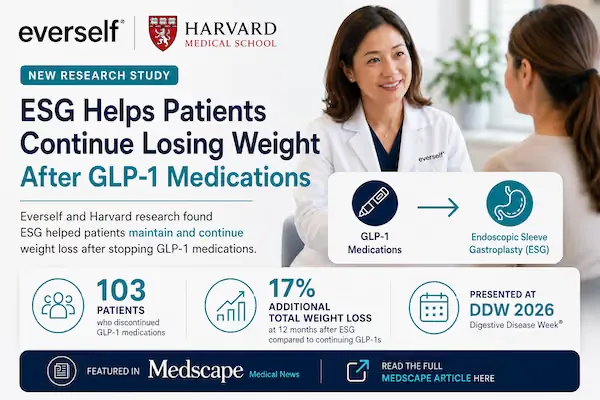
Research from Everself and Harvard Medical School looked at what happened when patients chose ESG after stopping a GLP-1. Source: Everself
Can a Procedure Change How Your Body Responds?
Procedures change the stomach itself, which then changes the signals your gut sends to your brain. Research on whether this shifts a set point is still in early stages, but the hormone findings are worth knowing.
What research suggests about traditional bariatric surgery
Traditional bariatric surgery, such as gastric bypass and sleeve gastrectomy, tends to produce more lasting weight loss than dieting. Researchers have asked why. These procedures change gut anatomy and the gut-brain signals that shape appetite and fullness, so their effects go beyond a smaller stomach. Another possible explanation is that the body starts defending a lower weight.
A 2016 review in the International Journal of Obesity Supplements supports that idea, mostly based on rodents. After the surgery, rodents that were overfed or underfed for a time drifted back to their new, lower weight. The authors note that the reasons remain unclear and call for more research in people.
How ESG Stomach Tightening® works with your hunger signals
ESG Stomach Tightening® is a one-time, non-surgical endoscopic procedure. A physician passes a thin endoscope through your mouth and uses sutures to reduce your stomach’s capacity by 60 to 75%. No incisions or scars are needed, and most people go home the same day.
A smaller stomach means you feel full on less food. Research also points to changes in the signals that control fullness. A 2023 Mayo Clinic study published in Gut compared 18 people who had ESG with 18 people who followed a lifestyle program alone.
After ESG, food left the stomach more slowly at both 3 and 12 months. Fasting levels of GLP-1 and PYY, two fullness hormones, rose by the 18-month mark. Ghrelin rose as well, which also happens after diet-driven weight loss.
The fullness side of that picture differs from the diet study above, where PYY stayed lower a year later. This was a small study, and it doesn’t show that ESG lowers a set point. It does suggest ESG affects how full you feel in ways that go beyond stomach size.
Dr. McGowan explains that ESG reduces stomach volume and changes gastric emptying and satiety signals, although evidence that it permanently changes a set point is limited.
On average, ESG leads to about 20% total weight loss at one year, and studies have tracked its results for up to 10 years. Recovery usually takes days, not weeks.
The research on ESG after stopping GLP-1 medications is especially relevant if you’re coming off a GLP-1. In a study led by Everself co-founder Dr. Pichamol Jirapinyo with Harvard Medical School, ESG was linked to about 17% additional total weight loss. Patients who switched to another GLP-1 lost about 5%, and those who relied on lifestyle changes alone saw slight regain.
The biggest difference between ESG and ongoing medication is how each one works over time. Medication controls hunger as long as you keep taking it, which suits many people who are comfortable with long-term treatment. ESG is a single procedure, so the smaller stomach doesn’t require a weekly dose.
“For the first time in over 30 years, I don’t feel like I’m trapped on that roller coaster anymore!” said Amanda, an ESG Stomach Tightening® patient.
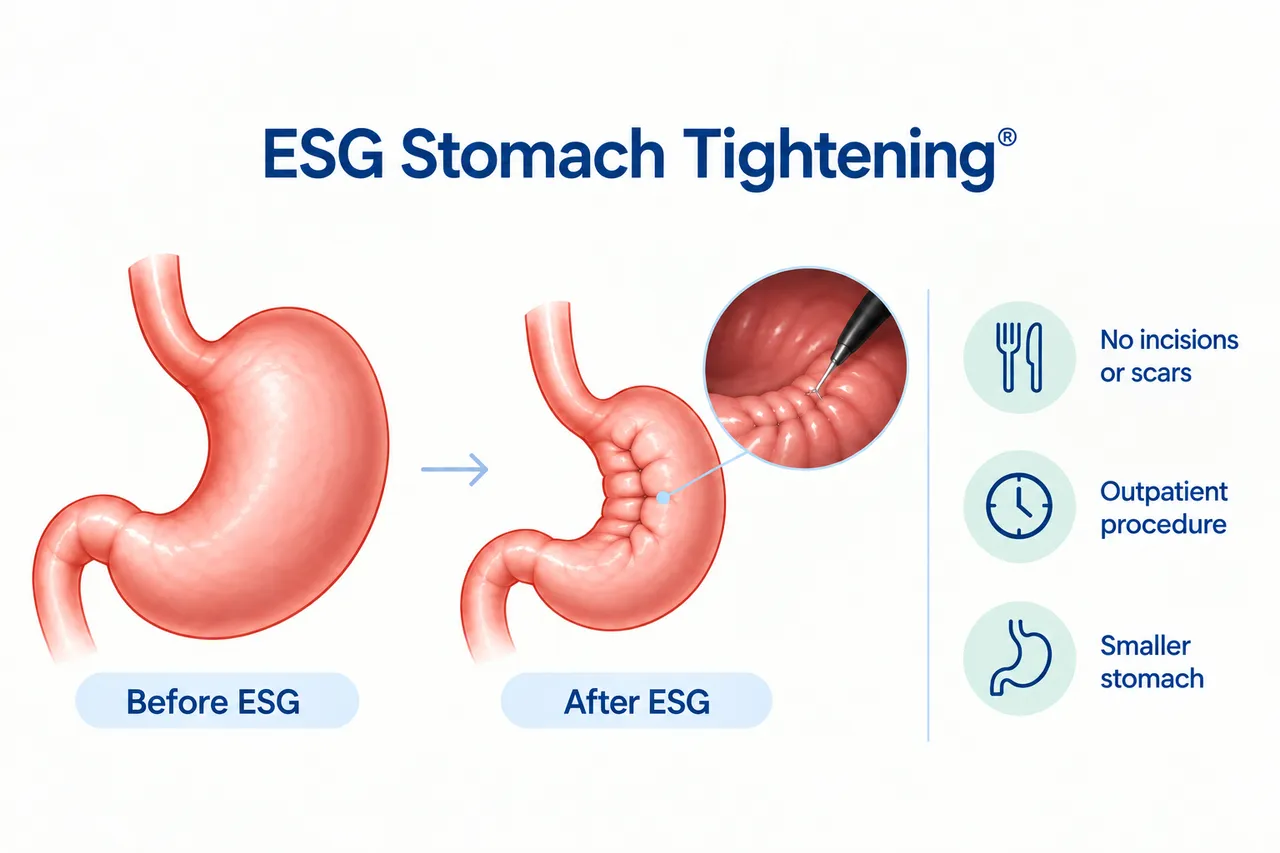
ESG Stomach Tightening® reduces stomach size from the inside, with no incisions or scars. Alt-text: An illustration of a tightened stomach. Source: Everself
Why the 12 months after your procedure matter
A procedure changes your stomach, but lasting results still depend on daily habits. For that reason, ESG comes with the Everself Program, 12 months of concierge weight care built around you.
Your care team includes physicians, nurse practitioners, registered nurses, registered dietitians, coaches, and care support. You reach them through an app, and a smart scale shares your progress so they can adjust your plan as you go.
The work centers on habit-building, from meal planning to handling social situations and the days when hunger spikes. Receiving ongoing support directly addresses the pushback this article describes, because the hormone shifts don’t end when the procedure does.
“Nothing is easy, but with this level of care and commitment, you’re set up for nothing but success. ESG has changed my whole lifestyle; you can do it too!” said Helen, an ESG Stomach Tightening® patient.
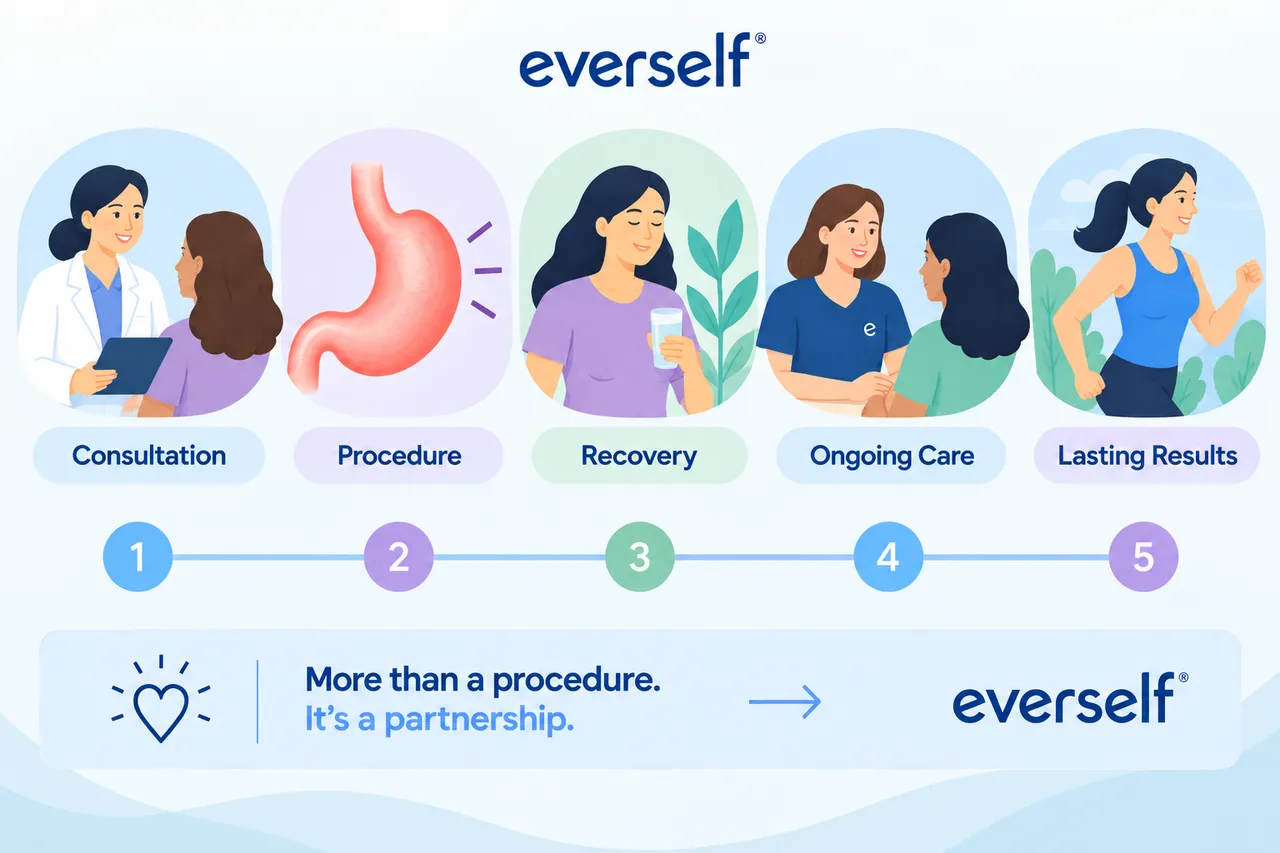
The Everself Program pairs your procedure with 12 months of concierge care, so you’re supported long after day one. Source: Everself
Other options that may fit
ESG isn’t the right fit for everyone. Depending on your history and goals, there are other options out there that may suit you better:
- Gastric Balloon is a reversible, non-surgical option that stays in place for six months, with average total weight loss of 10 to 15%.
- TORe is a non-surgical endoscopic revision for people who regained weight after gastric bypass, with average total weight loss of 10 to 15%.
- SIS is a non-surgical endoscopic revision for people who regained weight after a gastric sleeve, with average total weight loss of about 15%, sometimes as high as 20% with sustained lifestyle changes.
If you’re dealing with weight regain after a gastric sleeve, stomach stretching and shifting hormones often both play a part, and SIS can address them without another major surgery.
When It’s Worth Talking With a Doctor
Some weight changes deserve a medical conversation, whether or not you believe in set points. Be sure to check in with your doctor if:
- Your weight changes noticeably without a clear reason, such as a shift in eating, activity, or medication.
- You find yourself in cycles of strict restriction followed by overeating.
- Hunger feels intense or constant, even after regular meals.
- You’ve stopped weight-loss medication and are regaining weight quickly.
- Your weight is affecting your blood sugar, blood pressure, sleep, or joints.
A doctor can check for other conditions and medications that affect weight and help you decide what support fits. If your eating feels out of control, you can also ask about help with your relationship with food.
Your Next Step, Now That You Know How Your Body Responds
Your body’s pushback after weight loss is real. Hunger hormones shift, energy needs fall, and those changes can last long after a diet ends. It doesn’t mean that you lack willpower.
Set point theory remains unproven, and no treatment can promise to reset it. What you can do is choose a plan that works with your hunger signals and gives you real support while new habits take hold.
For some people, that plan includes ESG Stomach Tightening®, a one-time, non-surgical procedure paired with 12 months of care through The Everself Program. A free consultation can show you whether it fits your health, your goals, and your history.
See whether ESG Stomach Tightening® is right for you
Frequently Asked Questions
How do I know my set point weight?
No test measures your set point weight. The weight you tend to return to after dieting or following a plan can offer clues. Other factors can influence it, including habits, stress, sleep, and medications. A licensed clinician can help you establish a realistic health goal.
Why did I stop losing weight even though I’m still eating less?
A smaller body burns less energy, so portions that once created a deficit may now match your needs. Hunger hormones also tend to rise after weight loss. Check portions, protect muscle, and talk with a clinician.
Does yo-yo dieting raise your set point?
Research hasn’t shown that yo-yo dieting permanently raises your set point or damages your metabolism. Each round of restriction can trigger hunger and metabolic responses that make sustained weight loss progressively harder.
Can medication or a procedure lower your set point?
No treatment has been proven to lower a set point in people. Medication can influence appetite while you take it, and procedures such as ESG Stomach Tightening® can affect stomach capacity and fullness signals. Neither has been shown to reset a biological set point.
Sources
- Long-term persistence of hormonal adaptations to weight loss. (2011). The New England Journal of Medicine. Found on: https://pubmed.ncbi.nlm.nih.gov/22029981/ and found on: https://www.nejm.org/doi/abs/10.1056/NEJMoa1105816
- Set points, settling points and some alternative models: theoretical options to understand how genes and environments combine to regulate body adiposity. (2011). Disease Models and Mechanisms. Found on: https://pubmed.ncbi.nlm.nih.gov/22065844/.
- Metabolic rate and plateaus Found on: https://rechargeocalaclinic.com/blog/break-weight-loss-plateau/
- Harvard study on GLP-1 weight regain. Found on: https://www.health.harvard.edu/diet-and-nutrition/people-who-stop-weight-loss-drugs-may-gain-back-weight-and-lose-heart-benefits
- Weight regain and cardiometabolic effects after withdrawal of semaglutide: The STEP 1 trial extension. (2022). Diabetes, Obesity and Metabolism. Found on: https://www.ncbi.nlm.nih.gov/pmc/articles/PMC9542252/
- ESG effects on obesity study https://pmc.ncbi.nlm.nih.gov/articles/PMC10102256/
- Does gastric bypass surgery change body weight set point? (2016). International Journal of Obesity Supplements. Found on: https://www.nature.com/articles/ijosup20169.
- Hormone in rodent study. Found on: https://www.cuimc.columbia.edu/news/study-suggests-hormone-exists-promotes-weight-loss
- Effect of endoscopic sleeve gastroplasty on gastric emptying, motility and hormones: a comparative prospective study. (2023). Gut. Found on: https://gut.bmj.com/content/72/6/1073
- Sis endoscopic revision results to 20% weight loss Found on: https://anmed.org/services/weight-loss-procedures/endoscopic-sleeve-gastrectomy-esg-revision