Is ESG Covered by Insurance? What to Know
Wondering if ESG is covered by insurance? See how employer benefits, a new billing code, and financing can make ESG more affordable.

Global leader in endoscopic weight loss, Triple-board-certified in obesity
You’ve probably already priced out your options. Maybe a bariatric surgery quote came back higher than you expected, or your GLP-1 coverage quietly disappeared at renewal. So now you’re looking at ESG Stomach Tightening® and asking the question that decides everything.
Here’s the short version. ESG can now be covered by insurance, and that sentence wasn’t true a few years ago. Most of what you’ll find online still says otherwise.
Two things changed the picture. A permanent billing code took effect in January 2026, and a growing number of employer health plans now cover the procedure through Everself. This guide explains what actually determines your coverage, how to find out where you stand today, and what to do if the answer comes back no.
What You Need to Know
- ESG can now be covered by insurance, and Medicare covers the procedure while commercial coverage continues to expand.
- More than 100 million Americans are estimated to have access to health plans that may cover ESG, though benefits still depend on the individual plan.
- CPT code 43889 took effect on January 1, 2026, giving ESG a permanent billing code instead of an unlisted procedure code.
- The FDA granted De Novo marketing authorization for the Apollo ESG System in July 2022, the first authorization for a device built specifically for ESG.
- Having bariatric surgery benefits doesn’t mean ESG is covered, so your plan should be checked specifically against CPT 43889.
- Two patients with the same insurance carrier can have completely different ESG benefits, because employer plan design drives the outcome.
- Many employer-sponsored plans now cover up to 100% of ESG through Everself, subject to deductibles, copays, and coinsurance.
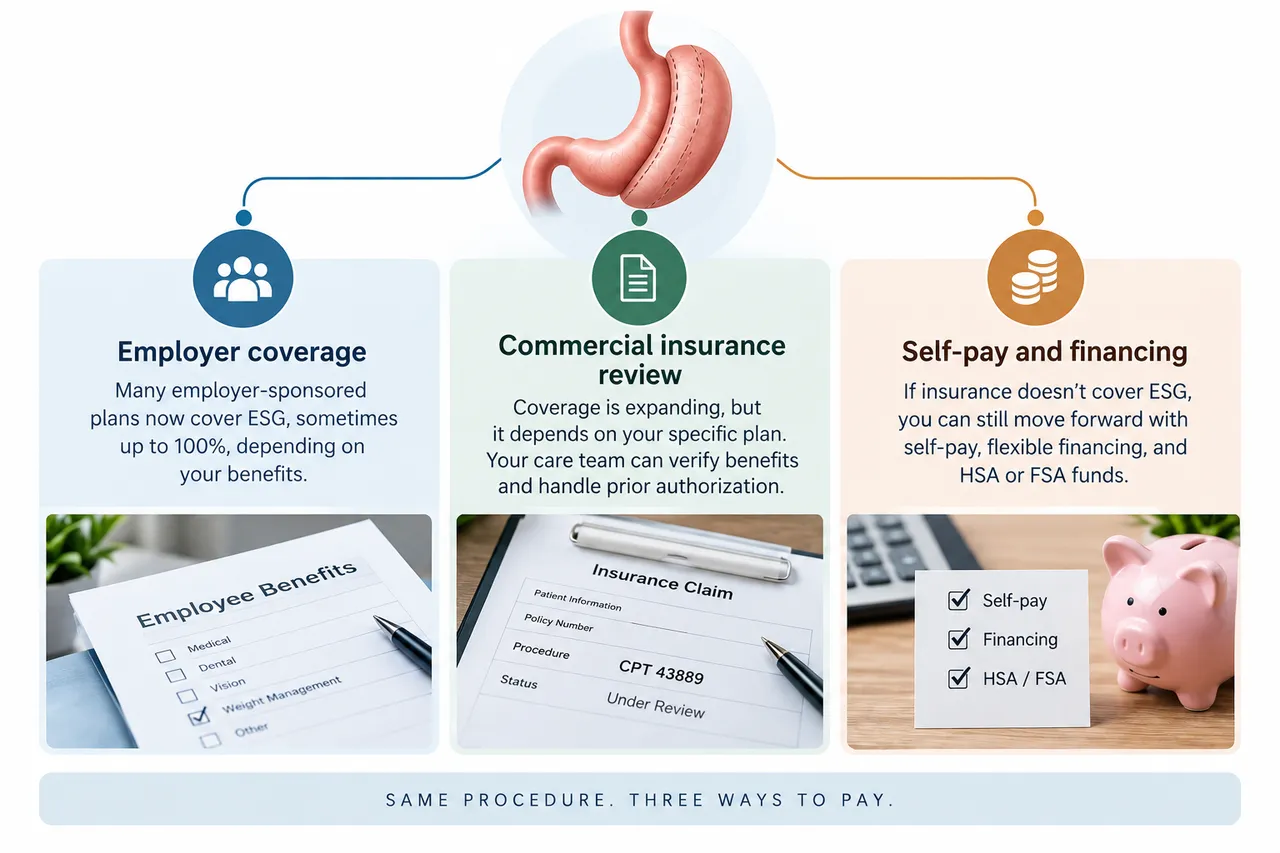
Three coverage paths for ESG, at a glance. Source: Everself
Is ESG Stomach Tightening® Covered by Insurance?
Yes, and that answer is new. Dr. McGowan notes that Medicare now covers ESG, and commercial insurers are steadily expanding their policies. He estimates that more than 100 million Americans have access to health plans that may cover the procedure. Whether ESG is covered by health insurance ultimately comes down to your specific plan, not a blanket industry rule.
That access isn’t the same as automatic approval. Your benefits still depend on your specific plan and its medical-necessity criteria. ESG insurance coverage varies considerably from one insurer to the next, and from one employer plan to another.
Two details surprise people most often:
- Two patients with the same carrier can have different ESG benefits. Employer plan design drives what’s covered, so the logo on your card tells you very little.
- Bariatric surgery benefits don’t automatically include ESG. Dr. McGowan advises checking coverage specifically for ESG and CPT code 43889 rather than assuming your bariatric benefit applies.
If someone told you ESG isn’t covered by health insurance, that answer may simply be out of date. Coverage is moving quickly, and older articles still describe a market that no longer exists.
See where you stand before you book anything. You can check if your employer covers ESG in about a minute. Everself verifies your benefits directly and explains any expected out-of-pocket cost before treatment.
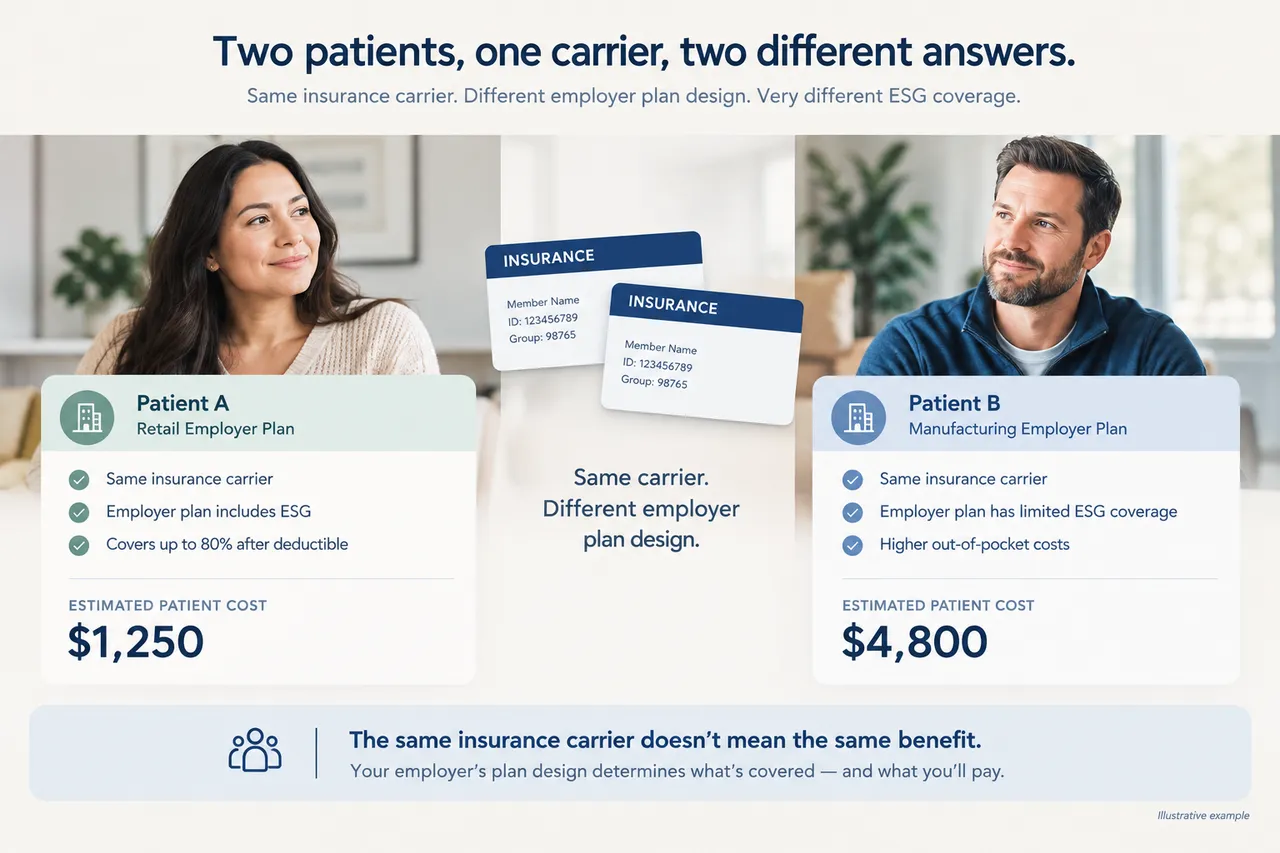
Two patients, one carrier, two different answers. Source: Everself
Does insurance pay for ESG right away?
Coverage rarely means instant approval. When a plan pays for endoscopic sleeve gastroplasty, the process almost always starts with prior authorization.
Your care team submits documentation of medical necessity. Insurers commonly apply BMI thresholds, obesity-related condition requirements, and a record of previous weight loss attempts. Your plan reviews the file and issues a decision before anyone schedules the procedure.
Some patients pay upfront and receive reimbursement later. This happens when a plan covers ESG but processes it as an out-of-network or post-service claim. Ask your care team which path applies to you before you commit.
Expect some out-of-pocket cost even with approval. Deductibles, copays, and coinsurance still apply, so “covered” and “free” aren’t the same thing.
Dr. McGowan’s advice here is practical. Have an experienced ESG program verify your specific benefits and secure any required authorization before your procedure is scheduled.
The Fastest Way to Find Out If You’re Covered
Calling your insurer and hoping for a straight answer isn’t the only option. Everself runs a coverage check against a growing list of partner employers.
Here’s how it works. You enter your employer, and Everself verifies your benefits with your plan directly. Many participating employer health plans cover up to 100% of ESG Stomach Tightening®, subject to deductibles, copays, and coinsurance.
Large employers across retail, airlines, logistics, healthcare, and financial services already appear on that list. Costco, UPS, and United Airlines sit alongside dozens of others.
The benefit often covers more than the procedure itself. Many employer plans also cover travel to an Everself Center of Excellence, including flights and accommodations.
If your employer isn’t on the list yet
The list isn’t complete, and it changes as new plans come on board. A missing name doesn’t mean a closed door.
Everself verifies eligibility individually rather than relying on the published list alone. You can submit a coverage check for any employer, listed or not. If your plan doesn’t include ESG today, the team will walk you through self-pay and financing instead.
Why Coverage Has Been Limited, and Why That’s Changing
Insurance coverage for endoscopic sleeve gastroplasty lagged for structural reasons, not clinical ones.
ESG has been performed for well over a decade. Dr. Christopher C. Thompson, Everself’s co-founder and a Professor of Medicine at Harvard Medical School, performed the first ESG procedures with current technology in 2012. Insurers still treated it as new.
Training pipelines stayed narrow, too. Few physicians were qualified to perform ESG well, and many practicing specialists trained under Everself’s founders directly. A small provider pool gives payers less data and fewer in-network options to work with.
Regulation moved first. In July 2022, the FDA granted De Novo marketing authorization to the Apollo ESG System, the first device authorized specifically for endoscopic sleeve gastroplasty. Even then, ESG remained largely self-pay, because no permanent billing code existed.
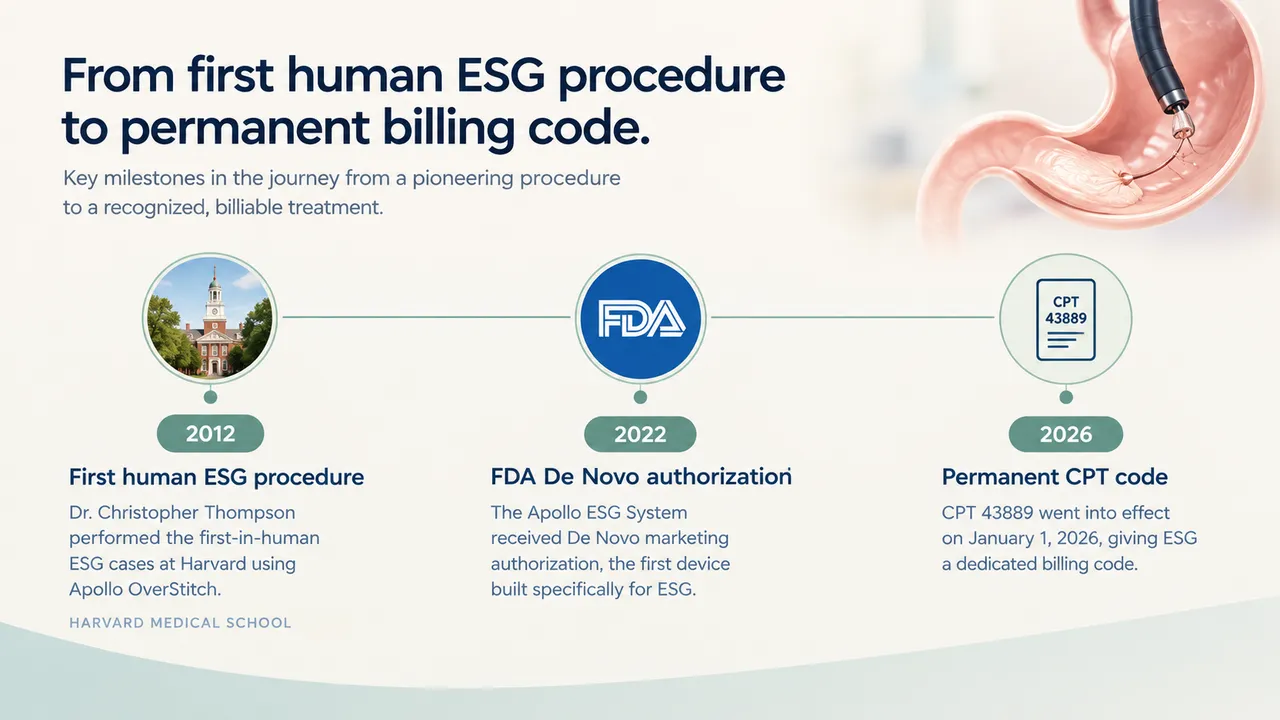
From Harvard invention to permanent billing code in 14 years. Source: Everself
The new billing code behind the shift
On January 1, 2026, CPT code 43889 took effect. It describes a gastric restrictive procedure performed transorally using endoscopic sleeve gastroplasty, including argon plasma coagulation when performed.
Before that, physicians reported ESG under an unlisted stomach procedure code. Every claim needed a cover letter explaining the work involved. Insurers had no standard way to price or track the procedure.
A permanent Category I code changes that. As the American Gastroenterological Association confirms, hospitals and ambulatory surgical centers can now report ESG the way they report any established procedure.
This is a milestone, and it isn’t a guarantee. The ASGE notes that payer coverage and payment policies will roll out over the following months. Individual insurers still write their own coverage policies, so the code creates the pathway rather than the decision.
How ESG Compares When It Comes to Cost and Coverage
Cost questions rarely stop at one procedure. Most people weighing ESG are also weighing bariatric surgery and GLP-1 medications.
- Bariatric surgery has the longest-established coverage pathway. Many plans cover it once you meet BMI and documentation requirements. It also permanently changes your anatomy and requires weeks of recovery. A full gastric sleeve surgery cost breakdown shows where the line items add up.
- GLP-1 coverage is inconsistent, and the cost never stops. Plans add and drop obesity drug coverage year to year. When coverage ends, the monthly bill falls back on you, and weight often returns after treatment stops.
- ESG sits between the two. It’s a one-time, non-surgical endoscopic procedure with no incisions and same-day discharge.
Recovery and reversibility often matter as much as the price tag. A closer look at ESG vs gastric sleeve shows how restriction, downtime, and permanence differ. Outcomes for the procedure are documented in peer-reviewed research, including the MERIT randomized trial published in The Lancet.
One more thing separates ESG at Everself from a standalone procedure quote. Every Everself procedure includes The Everself Program, 12 months of personalized weight care valued at $1,850, at no additional cost. That covers dietitian consultations, support groups, 24/7 clinical on-call support, a smart scale, comprehensive lab work, and post-procedure IV therapy.
You receive that support whether your employer pays or you finance the procedure yourself.
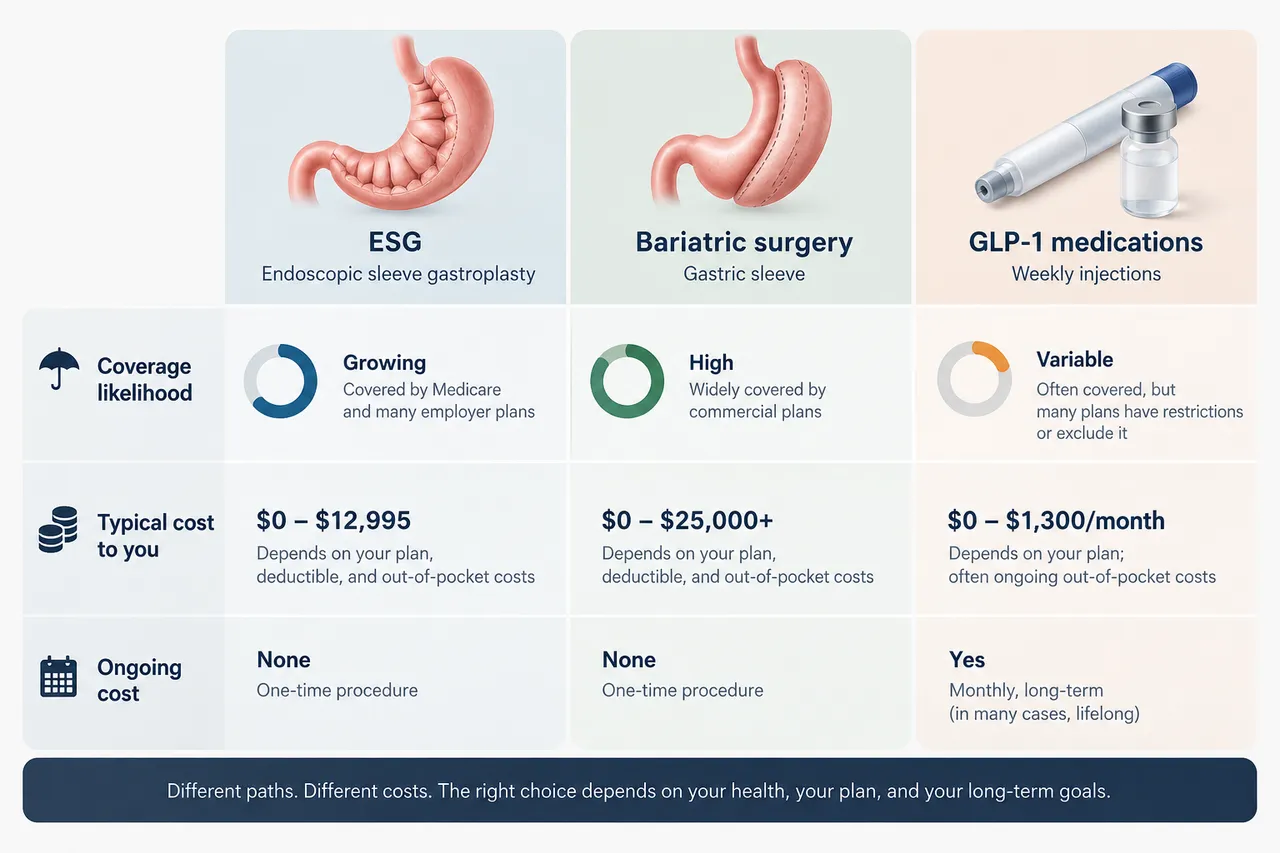
Coverage likelihood and lifetime cost, compared honestly. Source: Everself
Compare real numbers instead of estimates. Everself publishes pricing for every procedure alongside monthly payment figures. You can review ESG financing options and see what your cost would look like before you book a consultation.
Are you a candidate for ESG?
Candidacy is simpler than most people expect. You may qualify with a BMI of 30 or higher.
You may also qualify with a BMI of 27 to 29.9 plus a weight-related condition. That includes type 2 diabetes, high blood pressure, sleep apnea, and fatty liver disease.
ESG also suits people who haven’t reached their goals with lifestyle changes or medication alone. Understanding how ESG Stomach Tightening works helps explain why its BMI range differs from surgical criteria. If you’re still mapping the landscape, you can compare weight loss surgery options side by side.
Your Options If Insurance Says No
A denial doesn’t end the conversation. Everself built three practical routes for patients whose plans don’t cover the procedure.
- Financing spreads the cost across monthly payments. Everself works with Cherry and CareCredit, with plans starting at roughly $297 per month for ESG Stomach Tightening®.
- HSA and FSA funds apply as an eligible medical expense. Pre-tax dollars lower what you actually pay out of pocket.
- Paying in full keeps the process simple. You can pay upfront by credit card or bank transfer, with pricing published before your consultation.
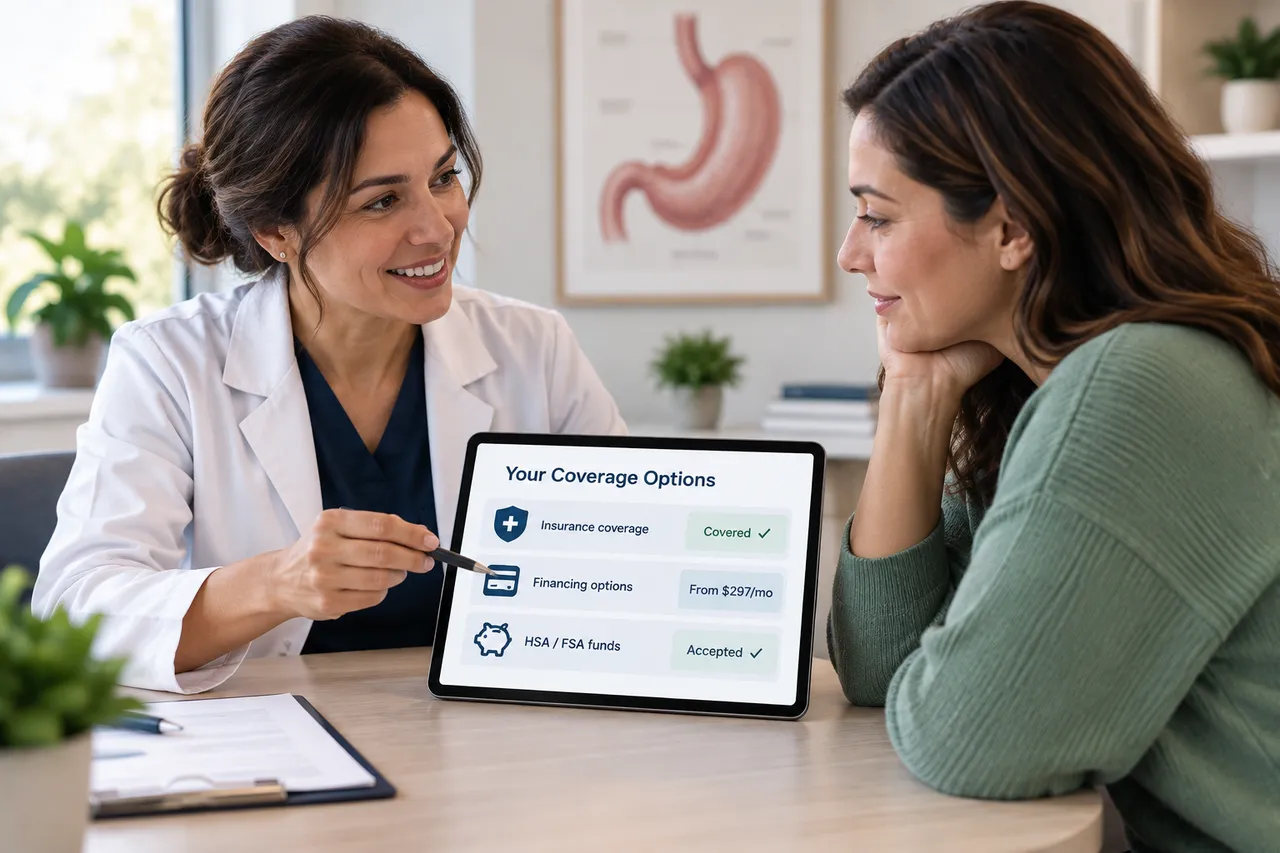
A free consultation turns a maybe into a real number. Source: Everself
Most people who assume ESG is out of reach have only checked one of these. Checking all three usually changes the math.
Coverage Is Getting Clearer. Here’s Your Next Step.
You don’t have to wait for someday coverage. You can find out where you stand this week.
Three real answers exist right now. Your employer plan may already include ESG Stomach Tightening®. Your commercial plan may approve it with prior authorization. Financing and pre-tax funds may make it reachable regardless of what your insurer decides.
Each of those beats guessing, and each one is faster than reading another outdated article. The coverage picture changed in 2026, and it keeps moving in one direction.
Talk with our team about your coverage and payment options. The consultation is free, and you’ll leave knowing what ESG would actually cost you. Start your coverage and consultation check.
Sources
NEW CPT CODES FOR GI SERVICES COMING IN 2026. (October 2, 2025). American Society for Gastrointestinal Endoscopy. FOUND ON: https://www.asge.org/home/resources/key-resources/blog/view/the-advocate/2025/10/02/new-cpt—codes-for-gi-services-coming-in-2026
CODING: BARIATRIC ENDOSCOPY FAQS. (December 16, 2025). American Gastroenterological Association. FOUND ON: https://gastro.org/practice-resources/reimbursement/coding/coding-bariatric-endoscopy-faqs/
DE NOVO CLASSIFICATION REQUEST DEN210045: APOLLO ESG SYSTEM. (July 13, 2022). U.S. Food and Drug Administration. FOUND ON: https://www.accessdata.fda.gov/cdrh_docs/pdf21/DEN210045.pdf
ENDOSCOPIC SLEEVE GASTROPLASTY FOR TREATMENT OF CLASS 1 AND 2 OBESITY (MERIT): A PROSPECTIVE, MULTICENTRE, RANDOMISED TRIAL. (August 6, 2022). The Lancet, via PubMed. FOUND ON: https://pubmed.ncbi.nlm.nih.gov/35908555/
CPT 2026 DELIVERS IMPORTANT CODING CHANGES FOR GENERAL SURGERY AND RELATED SPECIALTIES. (January 7, 2026). American College of Surgeons Bulletin. FOUND ON: https://www.facs.org/for-medical-professionals/news-publications/news-and-articles/bulletin/2026/january-2026-volume-111-issue-1/cpt-2026-delivers-important-coding-changes-for-general-surgery-and-related-specialties/
ESG INSURANCE AND EMPLOYER COVERAGE FOR ENDOSCOPIC SLEEVE GASTROPLASTY. (2026). Everself. FOUND ON: https://everself.com/coverage/