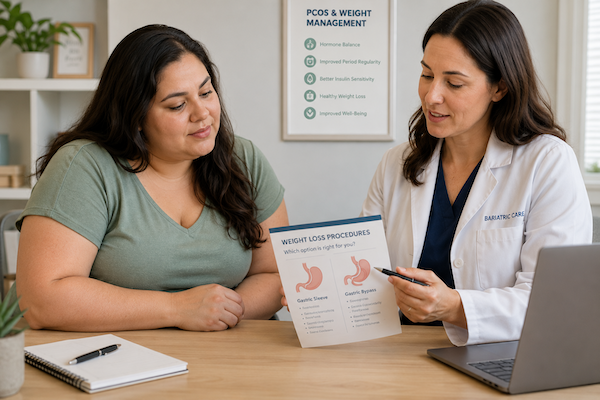
Bariatric Surgery Risks: What to Know Before You Decide
Considering bariatric surgery? Learn the most common short-term and long-term risks - and explore safer, non-surgical alternatives backed by science.

Global leader in endoscopic weight loss, Triple-board-certified in obesity
Asking about the risks of bariatric surgery is a responsible step. It shows you’re weighing a major decision with the seriousness it deserves.
Both hope and nerves make sense here, and this guide is designed to meet you in that place. It walks you through what bariatric surgery really involves: the short-term risks, the long-term considerations, what recovery looks like in practice, and how non-surgical options from Everself compare.
You deserve to choose your path with confidence, not fear.
What Are the Most Common Risks of Bariatric Surgery?
Most bariatric surgery patients recover well. Serious complications stay uncommon. Still, every operation carries real risks worth understanding. Knowing them helps you ask sharper questions and prepare with confidence.
Surgeons and medical reviews recognize a handful of short-term risks.
- Bleeding can happen during or after the procedure.
- Infection may develop at incision sites or inside the body.
- Some patients react to anesthesia, though serious reactions are rare.
- Blood clots can form, especially when movement is limited after the procedure.
- Leaks can develop where surgeons staple or join the stomach.
- Nutritional deficiencies may appear when the body absorbs fewer nutrients.
Clinical reviews indexed by the National Library of Medicine document these risks in detail. These events happen because surgery changes your anatomy and asks your body to heal. That healing takes time and careful support.
Modern techniques and careful screening have lowered complication rates over the years. Your surgical team checks your health before the procedure. They watch you closely afterward to keep you safe.
Different procedures carry different risk profiles. A gastric bypass reroutes part of the digestive system, which affects nutrient absorption more significantly and carries a higher risk of long-term deficiencies. A sleeve gastrectomy removes a portion of the stomach permanently, which reduces flexibility down the road but avoids the absorption complications of bypass. Your surgeon can walk you through which risks are most relevant to the procedure you’re considering.
What Does Recovery Look Like?
Recovery after bariatric surgery follows a general arc, though it looks different for everyone. Most patients stay in the hospital for one to two days. From there, healing happens in stages over several weeks.
Week one is mostly about rest. Diet starts with clear liquids only. Activity is very limited, and most patients go home within 48 hours of the procedure.
The first month is when the diet progresses from liquids and soft foods to more solid meals. Each phase gives your stomach room to heal safely. Energy often dips in the early weeks, which surprises some patients. Most people return to work within two to four weeks, depending on their job.
The first year is where habits decide long-term results. Follow-up appointments track your progress and catch any issues early. Light walking often starts within days of the procedure, while heavier exercise waits until your body is ready. Leaning on family and your care team makes this stretch easier.
Recovery carries an emotional side too. New eating habits and a changing body take time to adjust to. Two patients can have the same surgery and very different recoveries, and it’s worth discussing what’s typical for your specific procedure with your team.
Long-Term Considerations
A visual guide to the typical bariatric surgery recovery journey, from the first days after surgery through long-term lifestyle changes that support lasting weight loss success.
Bariatric surgery changes how your body works for the long term. Most considerations are manageable with the right plan and steady support. It helps to know them early so you can prepare.
- Lifelong vitamin and mineral supplements help prevent nutritional gaps - particularly B12, iron, calcium, and vitamin D, which the body absorbs differently after surgery.
- Smaller portions and mindful eating become part of daily life.
- Some patients regain weight over the years as habits shift.
- Reflux can start or worsen after certain procedures.
- Dumping syndrome. nausea, dizziness, or diarrhea after eating, can start soon after surgery and for some patients continues long-term. Adjusting meal size and composition usually helps manage it.
- Emotional adjustment takes time. A changing body and new relationship with food can bring unexpected feelings - both positive and challenging.
Research on long-term outcomes appears in a peer-reviewed study on PubMed Central. Your body absorbs fewer nutrients after surgery, so supplements fill the gap. Regular blood tests check your levels and guide any changes.
Weight regain worries many patients. That’s a fair concern. Some regain can happen as habits shift or the body adapts.
It doesn’t mean failure, and your team can help you respond. Options range from renewed nutrition support to non-surgical revision procedures. The point is that you keep choices, even years later.
Alcohol is also worth a conversation with your care team. After bariatric surgery, the body metabolizes alcohol differently, and smaller amounts can have stronger effects. It’s not a reason to avoid surgery - it’s a reason to go in with complete information.
Factors That May Affect Your Risk Level
Your personal risk isn’t a single number. Several factors shape how smoothly your procedure and recovery may go. Understanding them is exactly why a thorough consultation matters.
- Your overall health affects how your body handles the procedure and healing.
- The type of procedure carries its own risk profile.
- Your age can influence recovery speed and complication rates.
- A higher BMI may raise certain surgical risks.
- Smoking slows healing and raises the chance of complications.
No two patients carry the same risk, even with the same procedure. These factors often work together rather than alone. A higher BMI combined with smoking, for example, can compound the picture.
An honest conversation about your habits and history leads to a safer plan. No good specialist will judge you for your history. They use the full picture to lower your risk and protect your health.
It’s also worth knowing where the eligibility thresholds sit. Bariatric surgery typically requires a BMI of 35 or above with a qualifying health condition, or a BMI of 40 or above without one. If your BMI falls below that range, surgery may not be an option at all. ESG Stomach Tightening® is approved for adults with a BMI of 30 or above. Adults with a BMI of 27 to 29.9 may also qualify if they have a related health condition such as high blood pressure, type 2 diabetes, high cholesterol, sleep apnea, or fatty liver disease. That broader eligibility is one reason many people explore non-surgical care first.
Is There a Less Invasive Option?
Yes, several non-surgical options exist. Everself offers procedures that avoid incisions and long recovery. They suit many people who want meaningful weight loss without an operation.
ESG Stomach Tightening® is a one-time, non-surgical endoscopic procedure. A specialist reshapes your stomach from the inside using sutures, leaving no incisions and no scars. Patients head home the same day and return to daily life within a few days.
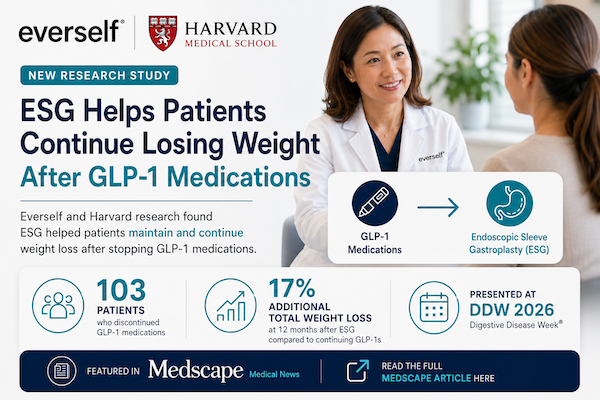
ESG grew out of Harvard-rooted endoscopic innovation. Everself’s founders helped pioneer the technique. That history gives the procedure deep clinical roots.
Patients lose an average of about 20% of their total body weight in two years, based on a worldwide review of ESG outcomes. That figure uses total weight loss, or %TWL, the measure clinicians now prefer. A separate review in Obesity Surgery reports improvements in conditions like high blood pressure and type 2 diabetes.
Reported results suggest ESG holds up well over time when paired with lifestyle support. The procedure works best as part of a plan, not on its own. Real change still asks for new habits and steady follow-up.
ESG suits people who want strong results without the downtime of an operation. It also appeals to those who prefer to keep their natural anatomy intact. For others, traditional surgery remains the better fit, and that’s worth respecting.
Every ESG patient receives 12 months of concierge support through the Everself Program. Your team can include physicians, dietitians, nurses, and coaches. That support helps you build habits that protect your results.
Here’s a quick way to see the difference between an operation and ESG.
| Factor | Bariatric Surgery | ESG Stomach Tightening® |
|---|---|---|
| Recovery time | Several weeks | A few days |
| Hospitalization | 1–2 nights minimum | Outpatient, same day |
| Scarring | External incision scars | No incisions, no scars |
| Reversibility | Permanent anatomical change | Natural anatomy preserved |
| Complication risk | Higher, including leaks, infection, and clots | Lower, no general surgical risk |
For busy parents and professionals, the short downtime makes a real difference. You can get back to work and family without weeks away. That practicality is one reason many people explore non-surgical care first.
If you’re comparing it to an operation, our ESG vs gastric sleeve guide breaks down the differences. You can also review the ESG weight loss pros and cons before you choose.
Curious what the process actually looks like step by step? Your patient journey walks through what to expect from first consultation to long-term care.
The Gastric Balloon offers another non-surgical path. It’s a temporary, reversible device that helps you feel full for about six months. It comes out afterward, once it has helped you build new habits. Many people pick the balloon as a lower-cost jump-start toward their goals. It also suits those who aren’t ready for ESG yet. The right choice depends on your goals, your timeline, and your comfort.
Curious whether a non-surgical approach could work for you? Schedule a consultation and explore your options with Everself’s team.
Questions Worth Asking Before You Decide
Bringing the right questions to a consultation is the sign of an informed patient.
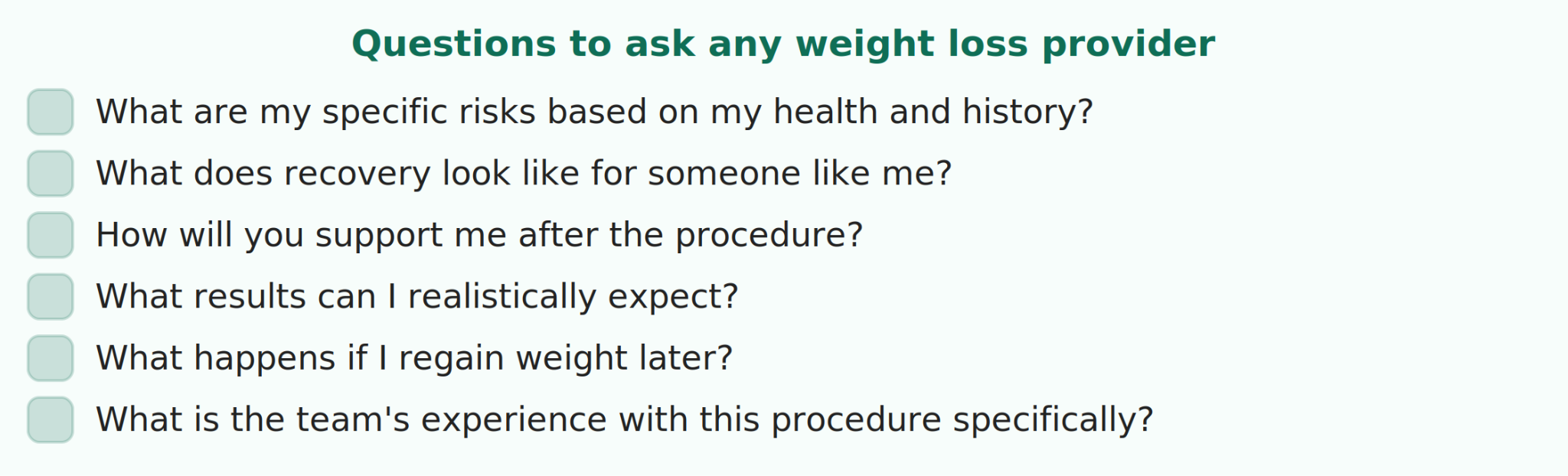
Good questions lead to good decisions. Bring these to any provider you consider, whether for surgery or a non-surgical option. They help you understand your fit, your risks, and your support.
- What are my specific risks based on my health and history?
- What does recovery look like for someone like me?
- How will you support me after the procedure?
- What results can I realistically expect?
- What happens if I regain weight later?
Write down the answers so you can compare providers later. Each answer tells you something about how the provider works. A good team welcomes your questions and answers them plainly.
If a provider rushes you, treat that as useful information. The right specialist gives you room to think. Choosing the right specialist matters as much as choosing the right procedure.
Our guide on How to choose the best ESG doctor walks you through what to look for. Asking these questions shows you’re an informed patient, not an uncertain one.
Making an Informed Choice About Bariatric Surgery
Understanding the risks doesn’t mean avoiding action. It means choosing your path with clear eyes and real confidence. That’s the goal here, not fear.
Bariatric surgery is the right choice for many patients. It improves health and changes lives. For others, a non-surgical option fits their health, goals, and lifestyle better.
The right path depends on your health, your goals, and how much support you want. Take the time you need to weigh the facts. There’s no single right answer for everyone.
Many people find clarity by talking the options through with a specialist. A good conversation can settle worries that research alone can’t. You don’t have to figure this out alone.
Everself helps you compare every option, from ESG Stomach Tightening® to the Gastric Balloon. You get clear answers, warm support, and medical expertise at every step.
Curious whether a non-surgical approach could fit your life? Explore ESG Stomach Tightening to take a confident next step.
Sources
- Bariatric Surgery Complications. (2025). StatPearls, National Library of Medicine. Found on: https://www.ncbi.nlm.nih.gov/books/NBK615299/
- Long-term Effectiveness, Outcomes and Complications of Bariatric Surgery. (2023). World Journal of Clinical Cases. Found on: https://pmc.ncbi.nlm.nih.gov/articles/PMC10353499/