Tummy Tuck vs. Gastric Bypass: Key Differences Explained
Tummy tuck vs. gastric bypass: understand what each procedure does, who it's for, and which step should come first on your weight loss journey.
Global leader in endoscopic weight loss, Triple-board-certified in obesity
You want a flatter, healthier midsection, and two very different procedures keep appearing in your research. Both involve the abdomen, so it’s easy to assume they’re interchangeable. They’re not, and picking the wrong one first can waste money and undo results.
Maybe diet and exercise have taken you part of the way before, more than once, only to stall out again. That history matters here, because it points to whether your next step should treat the weight itself or the shape it left behind.
A tummy tuck reshapes your body after weight loss. Gastric bypass treats obesity itself. This guide draws a clear line between them. It shows which step belongs first. It also covers non-surgical paths like ESG Stomach Tightening® for people who still have weight to lose.
Tummy Tuck vs. Gastric Bypass: What to Know First
- Gastric bypass and a tummy tuck solve different problems, so they aren’t interchangeable options.
- A tummy tuck removes excess skin and fat, but it doesn’t treat obesity or reduce body fat.
- Gastric bypass shrinks the stomach and reroutes digestion, which can drive significant weight loss.
- The American Society for Metabolic and Bariatric Surgery links bypass to better diabetes, blood pressure, and sleep apnea.
- For patients living with obesity, weight-loss treatment should come first, and body contouring can follow later.
- Surgeons prefer a stable weight before a tummy tuck, since later weight changes can distort the result.
What Is a Tummy Tuck (Abdominoplasty)?
A tummy tuck, or abdominoplasty, removes excess skin and fat from the abdomen. When it’s needed, the surgeon also tightens separated stomach muscles. The goal is a firmer, smoother contour.
A tummy tuck improves shape and appearance, not your weight. That’s the part many people miss.
The American Society of Plastic Surgeons calls it a contouring procedure, not a fix for excess weight. Most tummy tucks follow major weight loss or pregnancy. In both cases, the skin has stretched past the point where it can bounce back.
You may wonder about weight loss after a tummy tuck. The honest answer is that any drop on the scale is small. It comes from the removed tissue, not from a change in your metabolism.
What Is Gastric Bypass Surgery?
Gastric bypass is a bariatric surgery built to treat obesity. It also treats the diseases tied to obesity. The surgeon creates a small stomach pouch and reroutes part of the small intestine.
You eat less and absorb fewer calories. You also see real hormonal shifts. Those metabolic changes matter as much as the smaller stomach.
Hunger hormones settle, and insulin sensitivity improves. Significant weight loss usually follows. The American Society for Metabolic and Bariatric Surgery reports better type 2 diabetes, sleep apnea, hypertension, and fatty liver disease after bariatric procedures.
Surgeons usually reserve bypass for a BMI of 40 or higher, or a BMI of 35 or higher alongside a related condition like diabetes or high blood pressure. It’s a major operation with a hospital stay and weeks of recovery. Understanding how gastric bypass compares with gastric sleeve surgery can make it easier to choose the option that best fits your health goals.
Key Differences Between Tummy Tuck and Gastric Bypass
The clearest way to compare these procedures is side by side. They differ in purpose, outcomes, coverage, and recovery.
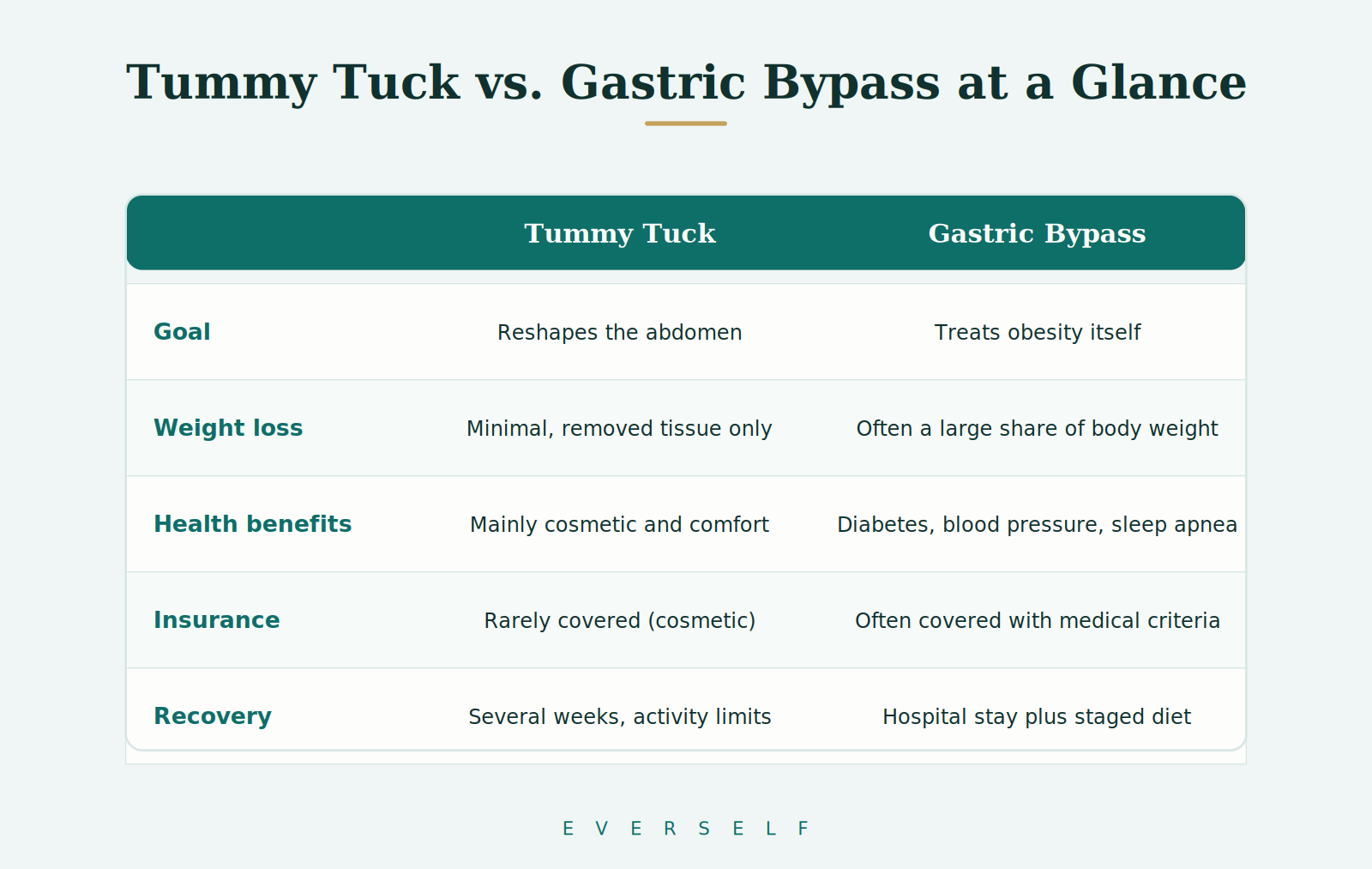
Seeing both procedures side by side helps you match the right treatment to your real goal.
These procedures sit in different medical categories. A tummy tuck is plastic surgery that works on skin and muscle. Gastric bypass is metabolic surgery that changes how your body handles food. For people still exploring treatment paths, understanding the full range of weight-loss surgery options can make the decision feel less overwhelming.
Not sure which problem you’re actually solving? You can compare your options with confidence with a specialist who understands both procedures.
Can a Tummy Tuck Help You Lose Weight?
A tummy tuck removes skin and some fat during the operation, which is worth answering directly. That is not weight loss in any real medical sense, since the procedure doesn’t curb hunger, shift your metabolism, or treat the drivers of obesity.
Visceral fat is the kind wrapped around your organs. It’s linked to disease, and a tummy tuck leaves it in place.
There’s a practical reason surgeons care about this. They want you near a stable goal weight before body contouring. Big weight swings afterward can stretch or loosen the result.
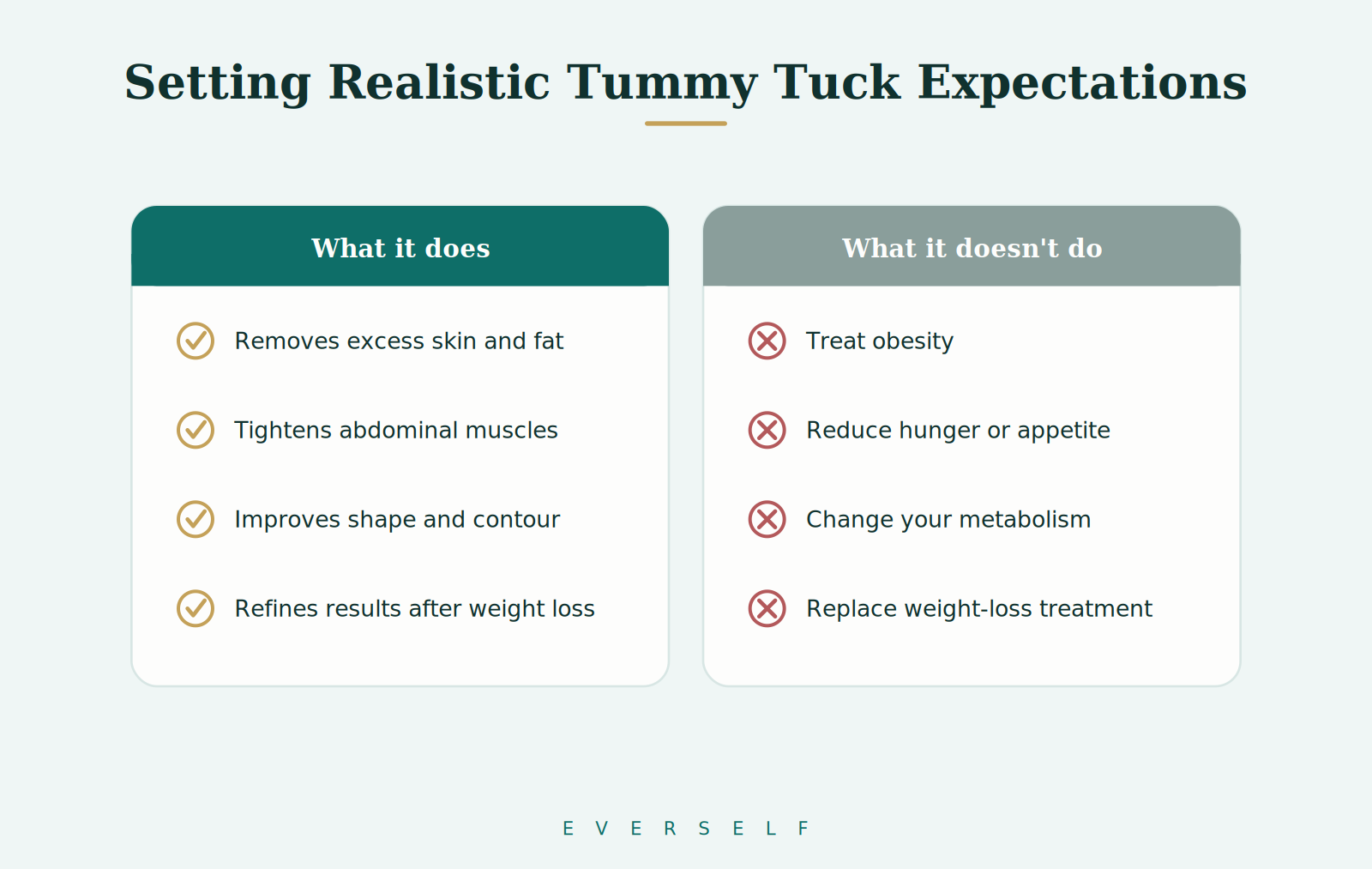
Knowing what a tummy tuck can and can’t do protects you from disappointment later.
Which Procedure Should Come First?
For patients living with obesity, weight-loss treatment comes first. This order protects your health and your cosmetic result at the same time.
Research in PubMed Central supports contouring only after weight has stabilized. Skin that’s re-stretched by weight regain can undo the tightening a surgeon just created. Most plastic surgeons want a stable weight held for several months first.
Think of the path as three steps. Weight-loss treatment comes first, whether it’s surgical, endoscopic, or medication-based. Weight stabilization comes second. Contouring comes last if you still want it.
After meaningful weight loss, many patients feel differently about contouring than they expected to. Some go ahead with it, and others find they no longer want it.
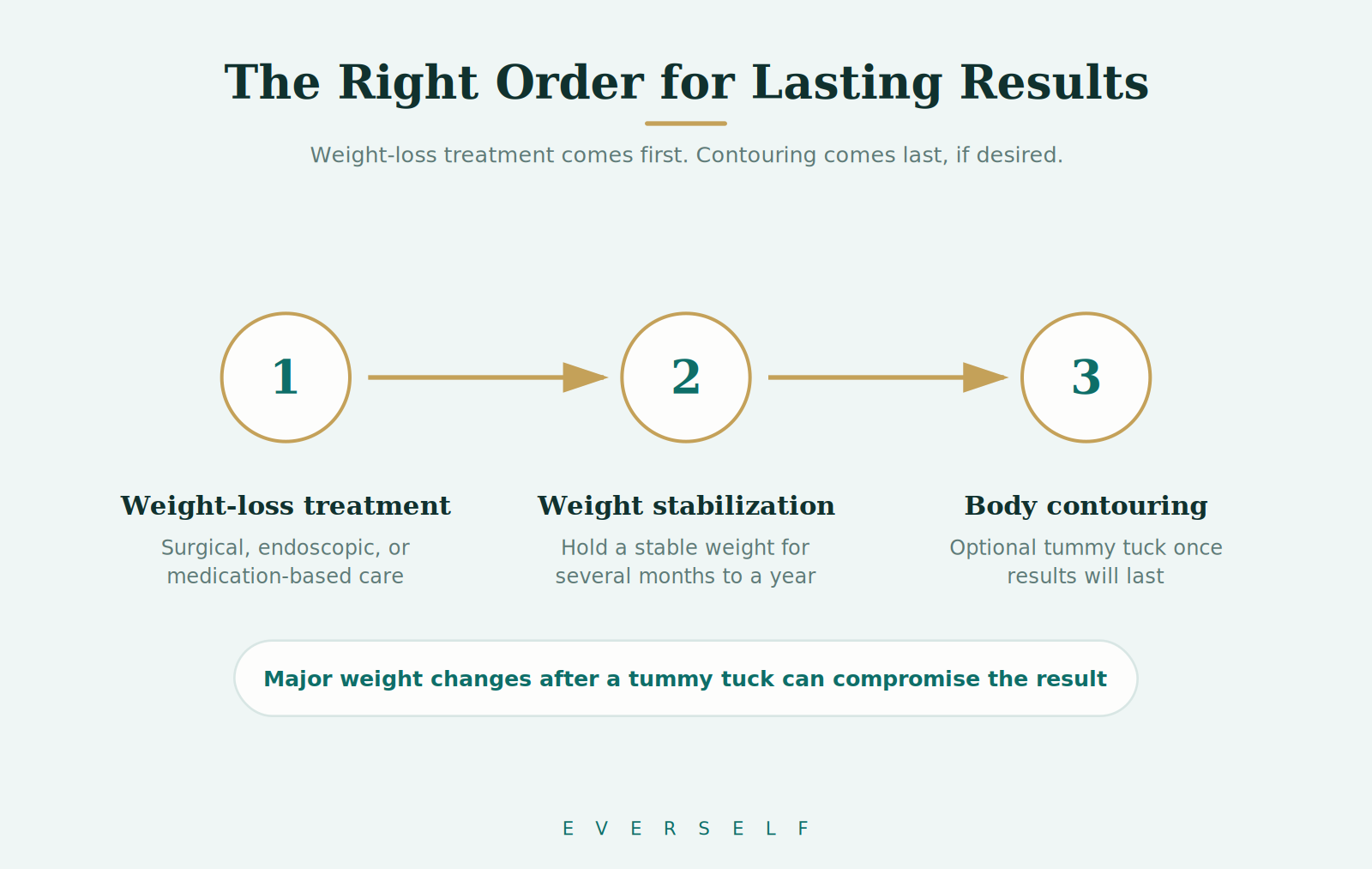
Treating weight first, then stabilizing, then contouring gives you the strongest long-term result.
What About ESG and Other Non-Surgical Weight Loss Options?
Gastric bypass treats obesity well, but it’s still major surgery, and that’s where many readers pause. It makes permanent changes to your anatomy. If that gives you pause, you have credible alternatives.
ESG Stomach Tightening® is a one-time, non-surgical endoscopic procedure. A physician places sutures inside the stomach through the mouth and tightens it from within. There are no incisions and no scars. Recovery usually takes days instead of weeks.
Everself’s founding physician helped pioneer the ESG technique at Harvard Medical School and has since performed thousands of these procedures. Published clinical data on ESG report average results around 20% total weight loss (%TWL).
GLP-1 medications are another route, though they usually need ongoing use to hold results. Patients searching for the least invasive weight loss surgery alternatives often land on ESG. You can also read how patients lose weight without bariatric surgery through endoscopic and medical paths.
One distinction is worth repeating. Weight-loss therapies and body-contouring procedures do different jobs. ESG helps you lose the weight, and a tummy tuck can refine your shape later.
Curious whether a non-surgical path fits your life? You can see whether ESG Stomach Tightening® is right for you in a personalized consultation.
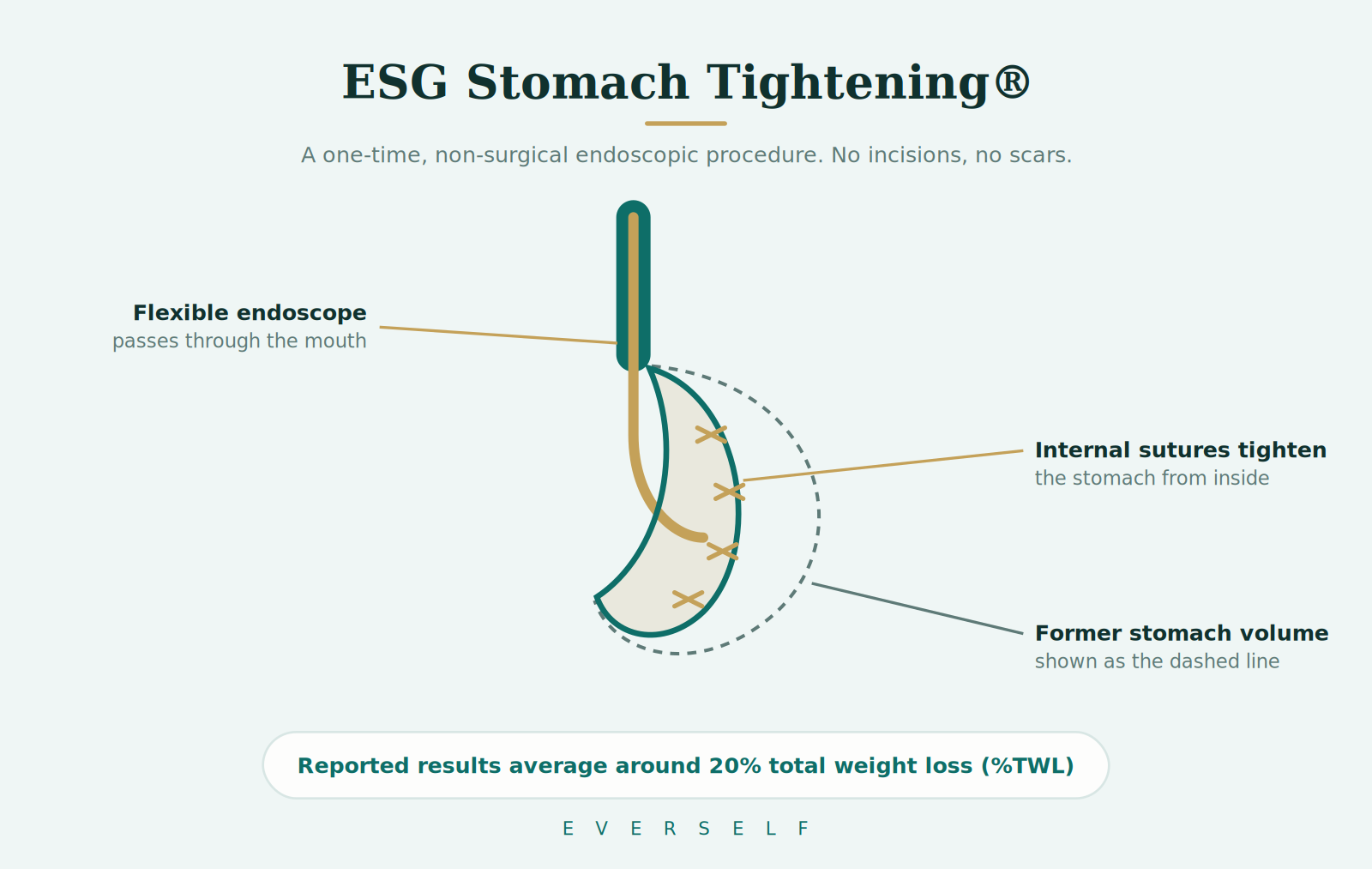
ESG Stomach Tightening® offers meaningful weight loss without incisions, scars, or a long recovery.
Can Patients Eventually Have Both?
Yes, and many patients do. Wanting better health is valid. Wanting to feel good in your body is valid too. They fit together well when you sequence them right.
The usual path: a patient finishes weight-loss treatment first; that could be gastric bypass, ESG Stomach Tightening®, or supervised medication. They then hold a stable weight for several months to a year. If loose skin remains after that, a tummy tuck becomes a fair next conversation.
At that point, the contouring result is more predictable and more durable. A good care team helps you decide honestly whether you still want that step.
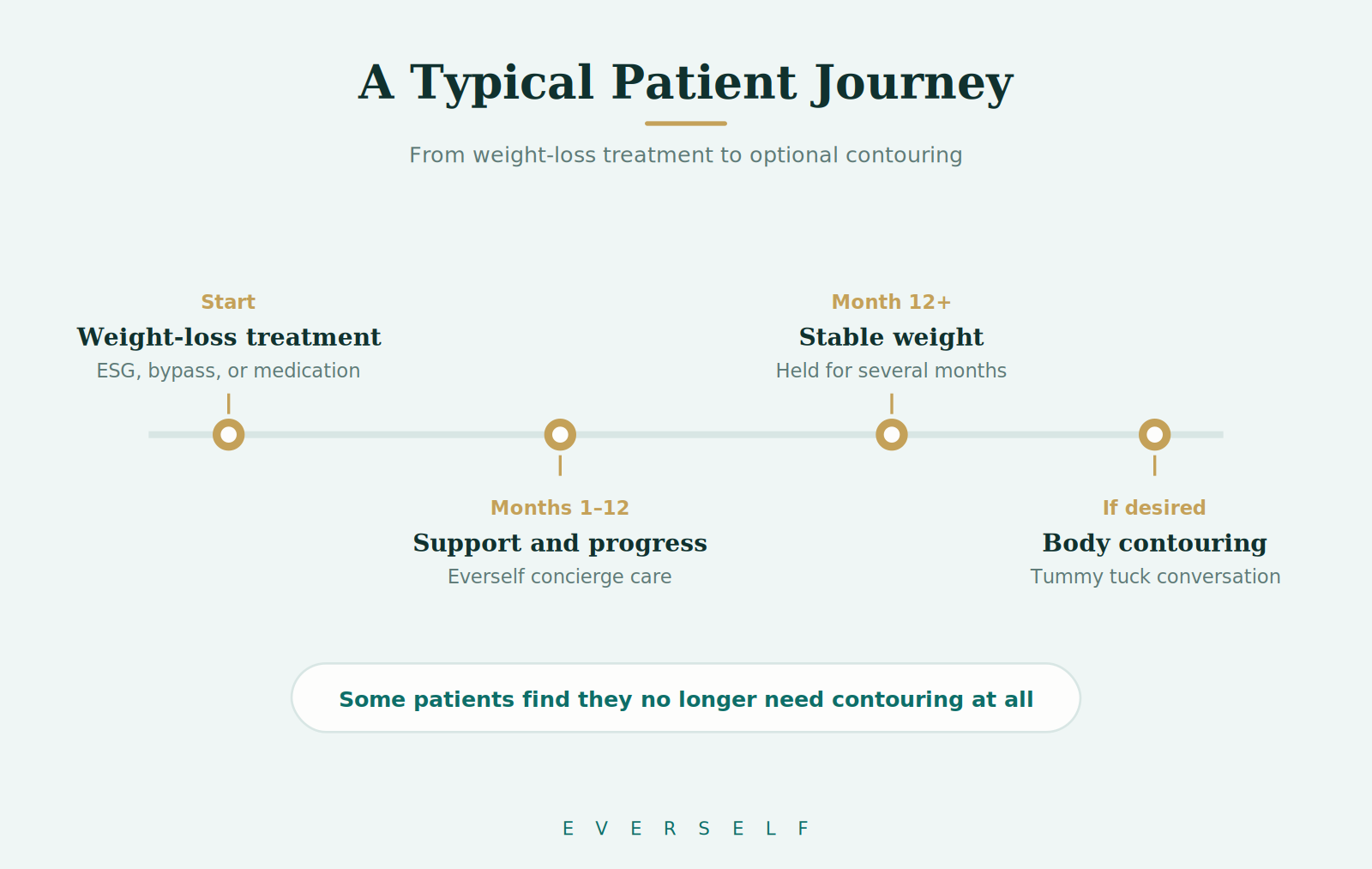
Health and confidence goals can coexist when you take them in the right order.
Tummy Tuck vs. Gastric Bypass: Which One Do You Actually Need?
These procedures aren’t rival answers to one question. Gastric bypass treats obesity and metabolic disease. A tummy tuck addresses loose skin and contour once the weight is gone.
So the real question is where you stand today. If you’re still working toward meaningful weight loss, treat obesity first. If your weight has held steady and loose skin is your concern, contouring may be the right conversation.
If you’re still carrying significant excess weight, your priority should be treating obesity itself. Weight-loss procedures like gastric bypass are designed to improve overall health, reduce obesity-related conditions, and help you achieve lasting weight loss. Only after your weight has stabilized does it make sense to evaluate whether loose skin or weakened abdominal muscles are affecting your comfort or confidence.
If you’ve already reached and maintained your goal weight, the conversation changes. At that stage, a tummy tuck may help address the excess skin and stretched abdominal tissues that diet and exercise can’t correct. The best cosmetic outcomes typically happen when your weight has remained stable for several months, reducing the chance that future weight changes will compromise your results.
For some people, however, traditional bariatric surgery feels like a bigger step than they’re ready to take. ESG Stomach Tightening® offers a less invasive alternative that supports meaningful weight loss without incisions or permanent changes to your anatomy. As a one-time endoscopic procedure, it’s designed for patients who want an effective option with a shorter recovery. The Everself Program complements the procedure with 12 months of concierge support from a multidisciplinary care team, physicians, nurse practitioners, and dietitians among them, to help patients build sustainable habits long after treatment.
The most successful treatment plans are built around the right sequence. Treat excess weight first, give your body time to stabilize, and then decide whether body contouring is still something you want or need. Following that progression protects both your health and your long-term results.
Ultimately, the right choice depends on where you are today, not where you hope to be six months from now. Whether you’re exploring bariatric surgery, considering a non-surgical option like ESG Stomach Tightening®, or wondering if it’s finally time for body contouring, an individualized evaluation can help determine the next step that makes the most sense for your goals.
Ready to find your first right step? You can schedule a consultation to explore your options and build a plan around your goals.
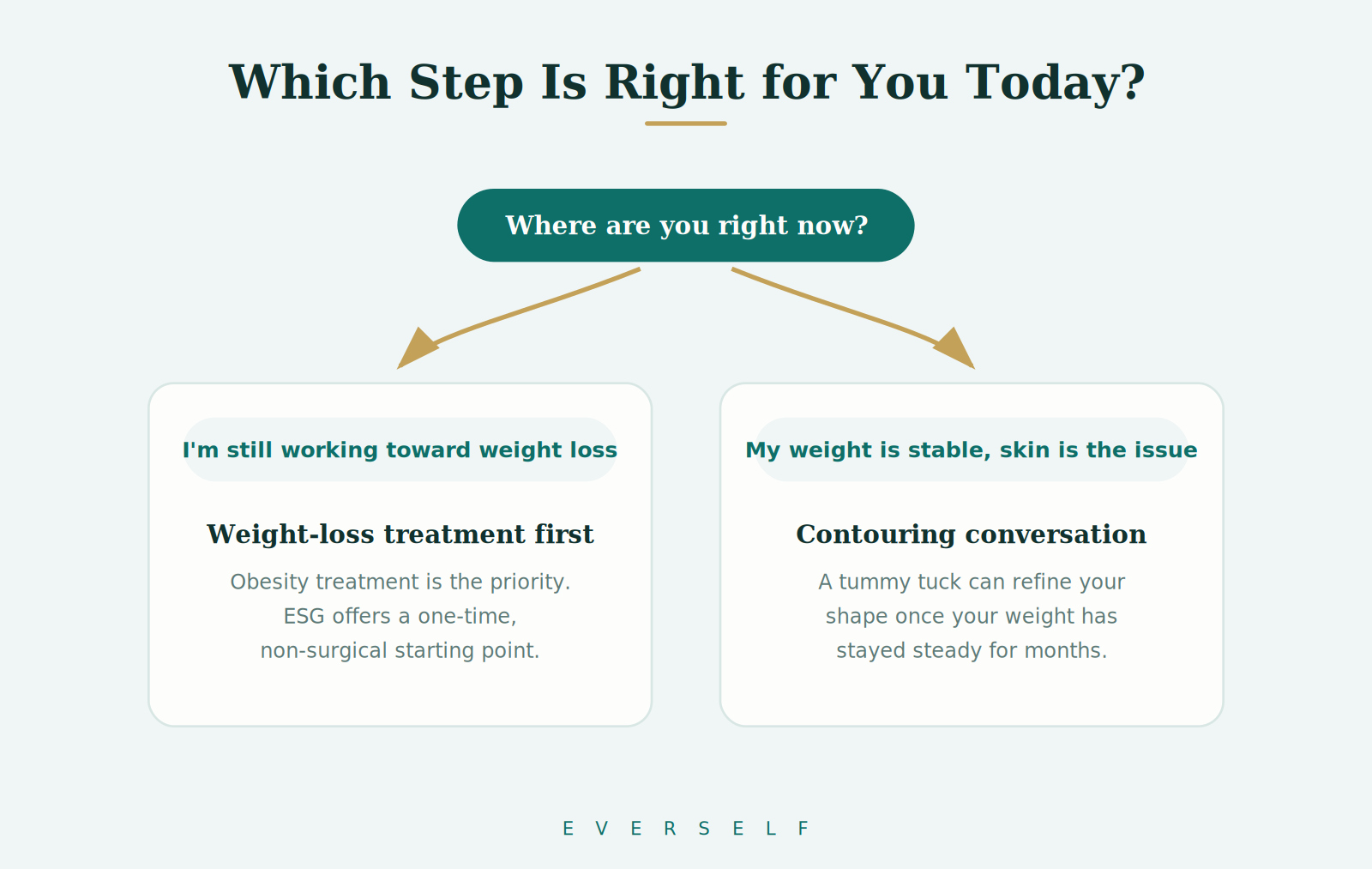
The right first step depends on where you stand in your weight loss journey today.
Sources:
- BODY CONTOURING FOLLOWING MASSIVE WEIGHT LOSS. (2022). PubMed Central, National Library of Medicine. FOUND ON: https://pmc.ncbi.nlm.nih.gov/articles/PMC9330885/
- TUMMY TUCK (ABDOMINOPLASTY). (2026). American Society of Plastic Surgeons. FOUND ON: https://www.plasticsurgery.org/cosmetic-procedures/tummy-tuck
- BARIATRIC SURGERY PROCEDURES. (2026). American Society for Metabolic and Bariatric Surgery. FOUND ON: https://asmbs.org/patients/bariatric-surgery-procedures/