Huberman Lab
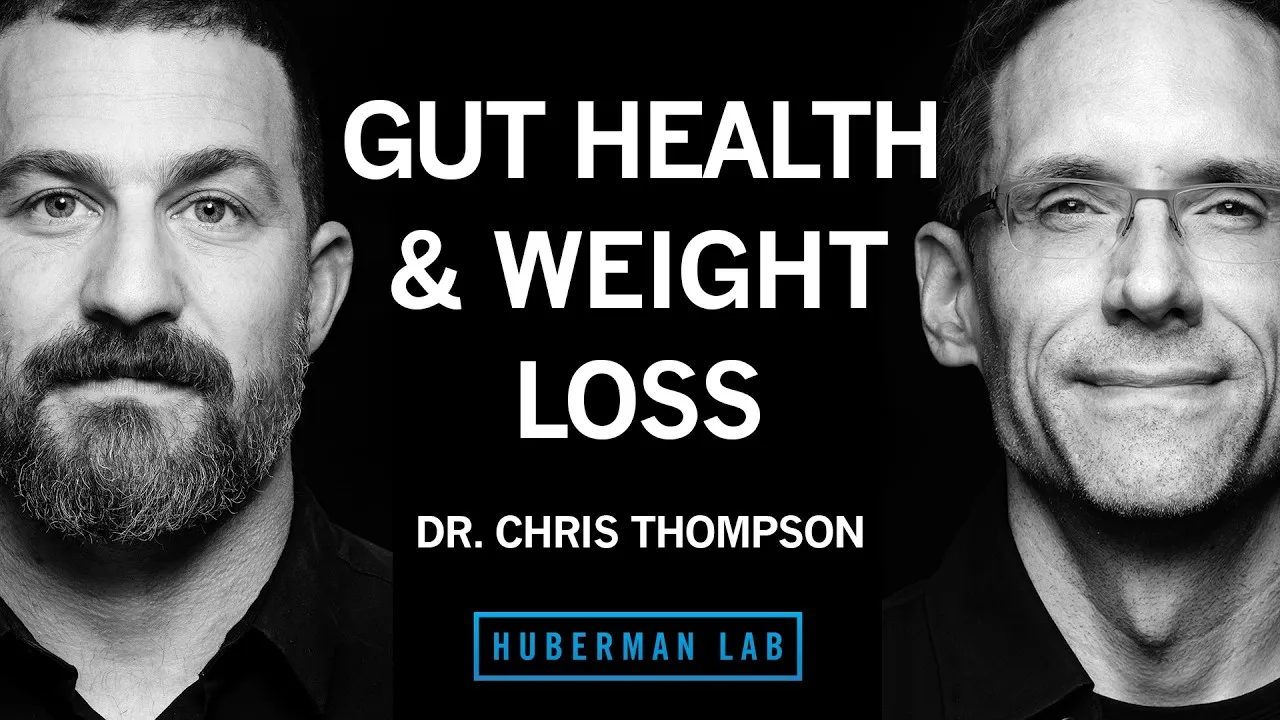
Dr. Chris Thompson on Huberman Lab: Best Tools for Gut Health & Weight Loss
Why the body fights weight loss, where GLP-1s fall short, and how ESG works differently. A conversation with Andrew Huberman on how the body regulates weight, why it defends the weight it has, and what today's treatments actually change.
Sep 21, 2026
Listen to the full episodeWhat they covered
Jump straight to a topic. Each one opens the episode on YouTube at that point.
- 30:20
What are the benefits and limitations of GLP-1 medications for weight loss?
Dr. Thompson explains why GLP-1 medications have been a major advance in obesity treatment, while also discussing challenges such as side effects, adherence, muscle loss, and uncertainty around long-term use. - 33:42
What happens when you stop taking a GLP-1?
GLP-1 medications are generally intended for ongoing treatment, and stopping them can make weight maintenance difficult. Dr. Thompson discusses lower-dose strategies, weight regain, and why patients may need another long-term plan to help maintain their results. - 47:44
How do hunger hormones affect weight loss?
Weight regulation involves more than just GLP-1. Dr. Thompson explains how hormones such as ghrelin, CCK, GIP, and GLP-1 work together to influence hunger, fullness, and eating behavior. - 2:06:31
Why is it so hard to maintain weight loss?
After weight loss, the body can adapt by increasing hunger and reducing how many calories it burns, pushing weight back toward a biologically defended range. Dr. Thompson explains why these metabolic adaptations can make long-term weight maintenance so challenging. - 2:08:13
How does ESG work for weight loss?
Dr. Thompson explains how ESG folds the stomach to create earlier fullness signals while also slowing gastric emptying and suppressing ghrelin, a hormone involved in hunger. These mechanisms help address some of the biological forces that can work against sustained weight loss. - 2:14:16
Can ESG and GLP-1 medications be used together?
Dr. Thompson describes a more personalized, multimodal approach to obesity treatment, where endoscopic procedures and medications can target different biological pathways. In some cases, combining approaches may allow patients to achieve a treatment effect without relying as heavily on any single intervention. - 2:15:48
Why diet and exercise still matter after ESG
Procedures and medications can help counter some of the body's biological resistance to weight loss, but Dr. Thompson emphasizes that nutrition, movement, and resistance training still matter. He argues that even effective treatments are less likely to succeed long term if the underlying lifestyle factors aren't addressed.