Is Liposuction or Bariatric Surgery Better for Weight Loss?
Liposuction vs bariatric surgery: Understanding the key differences in risks, recovery & results, non-surgical alternative.


Everself Team
Team @ Everself
If you’ve been researching weight loss options for a while, you’ve probably noticed how confusing the choices can feel. Liposuction promises fast changes. Bariatric surgery offers dramatic results. And newer non-surgical options claim to sit somewhere in between. The problem? These treatments are often talked about as if they’re interchangeable when they’re designed for very different goals.
For many people with a BMI over 30 who want to lose 30–60 pounds, this creates real frustration. Diets haven’t stuck. Medications may feel like a long-term commitment you’re unsure about. Surgery sounds effective, but also intimidating. And cosmetic procedures don’t seem to address the bigger picture. So how do you know which path actually fits your body and expectations?
This guide breaks down liposuction vs bariatric surgery, along with non-surgical options, side by side focusing on how they work, what kind of weight loss they realistically support, and what daily life looks like afterward.
What Is Liposuction?
Liposuction is a cosmetic fat-removal procedure designed to reshape specific areas of the body. It’s often misunderstood as a weight loss solution, but its real purpose is body contouring—refining shape rather than addressing obesity or long-term weight management.
How Liposuction Works
Liposuction works by physically removing fat cells from targeted areas such as the abdomen, thighs, hips, arms, or chin. A surgeon inserts a thin tube under the skin and uses suction to pull out fat deposits. The goal is smoother contours.
Most people lose only about 3–5 pounds after liposuction. That’s because fat is taken from localized pockets, not from the body’s overall energy balance or appetite-regulation systems.
Another important point: liposuction does not change how your body processes food or stores fat in the future. If eating habits remain the same, fat can sometimes return to different areas. This is why liposuction is considered cosmetic rather than a medical treatment for obesity.
This distinction is often missed when people compare gastric bypass vs liposuction as weight loss options, even though the two procedures are designed for completely different outcomes.
Ideal Candidates (near ideal weight, localized fat)
Liposuction is best suited for people who are already close to their goal weight but struggle with stubborn fat that doesn’t respond to diet or exercise.
It is not designed for individuals with a body mass index over 30 who are aiming to lose 30–60 pounds. For those patients, the limitation is how the body regulates hunger, fullness, and long-term weight.
If you’re researching options because diets have failed repeatedly and you want durable weight loss without surgical scars or long recovery times, exploring medically guided non-surgical procedures may align more closely with your goals.
Pros and Cons: What Liposuction Can and Can’t Do
Liposuction does have advantages when used for the right reason and the right patient.
| Pros of Liposuction | Cons of Liposuction |
|---|---|
| Improves body contour quickly in targeted areas | Not a solution for obesity or meaningful weight loss |
| Helps remove stubborn fat pockets resistant to diet and exercise | Average weight change is only 3–5 pounds |
| Shorter procedure time compared to major surgical weight loss procedures | Does not reduce hunger or change eating behavior |
| No ongoing device, medication, or long-term medical program required | Weight regain is possible if lifestyle habits don’t change |
What Is Bariatric Surgery?
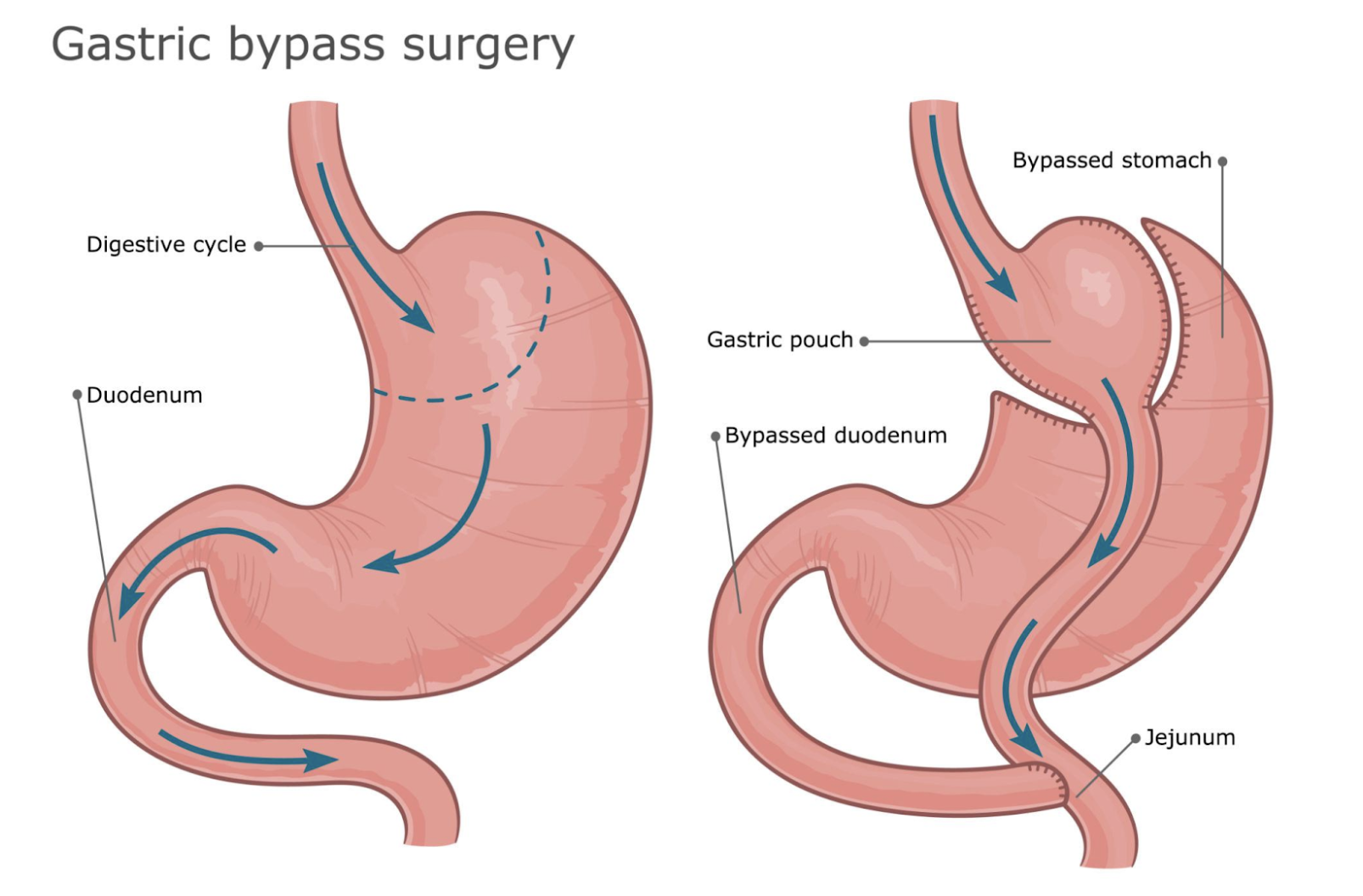
Bariatric surgery refers to a group of surgical procedures designed to produce significant weight loss by permanently altering the digestive system. While there are several types, gastric bypass is one of the most commonly performed and widely studied options.
Other forms include gastric sleeve surgery and adjustable gastric bands, but gastric bypass is often used as the benchmark when people compare liposuction vs bariatric surgery. That’s because it tends to produce larger and faster weight loss than most other surgical approaches.
Gastric bypass has been used for decades and is backed by long-term data. For people with severe obesity or obesity-related health conditions, it has played an important role in improving outcomes like type 2 diabetes and high blood pressure. That said, the results come with permanent anatomical changes and that’s where many patients begin to hesitate.
How Bariatric Surgery Works
Gastric bypass works in two key ways. First, the surgeon creates a much smaller stomach pouch, which limits how much food can be eaten at one time. Second, part of the small intestine is rerouted, meaning fewer calories and nutrients are absorbed.
This combination leads to substantial weight loss because it affects both how much you can eat and how your body processes food. Many patients experience reduced hunger, especially in the early months after surgery.
In long-term clinical trials, patients undergoing gastric bypass maintained an average of 26% total weight loss at five years, compared to 22–23% after sleeve surgery, reflecting the added impact of intestinal rerouting on calorie absorption.
Ideal Candidates, Pros, and Cons
Bariatric surgery is generally recommended for people with a body mass index over 35, or over 30 with serious health conditions related to weight. It’s often considered when other methods like diet, exercise, and medications have repeatedly failed.
For someone seeking large-scale weight loss, the appeal is obvious. Bariatric surgery can deliver dramatic results that are difficult to achieve through lifestyle changes alone.
But it’s not a simple decision. The procedure is invasive and irreversible. Recovery can take weeks, sometimes longer, and complications such as nutrient deficiencies, digestive issues, or surgical revisions are not uncommon.
To make this easier to compare, here’s a high-level view:
| Potential Benefits | Important Trade-Offs |
|---|---|
| Significant weight loss (often 25–35% total body weight loss) | Invasive surgery with permanent anatomical changes |
| Can improve obesity-related conditions | Lifelong dietary restrictions and supplements |
| Long history of clinical data | Risk of complications and need for future revisions |
| Reduced appetite for many patients | Longer recovery and time off work |
For many women comparing bariatric surgery vs liposuction, the question becomes less about can it work and more about what I am willing to live with long-term. That tension is exactly why so many people now explore alternatives before committing to surgery.
Non-Surgical Alternatives: What is ESG Stomach Tightening?
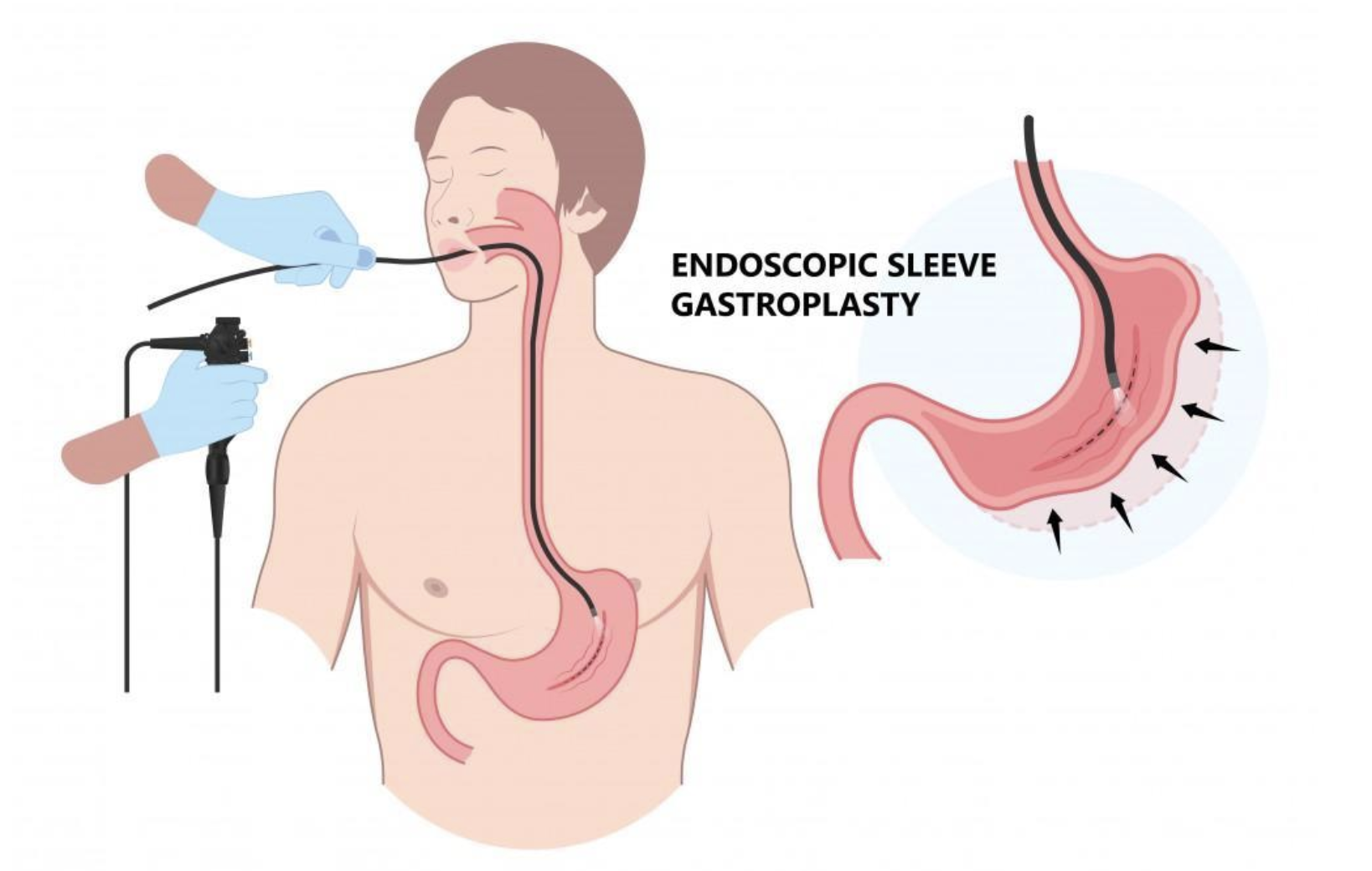
ESG Stomach Tightening® is a non-surgical, endoscopic weight loss procedure designed for people who want meaningful results without permanent anatomical changes. There are no incisions, no external scars, and no removal of any part of the stomach.
Instead, a physician uses an endoscope passed through the mouth to place internal sutures that reduce the stomach’s volume by about 70–75%. These sutures help slow digestion and promote earlier fullness, so you naturally eat less without feeling deprived.
The procedure is performed on an outpatient basis, and understanding the process ahead of time can help set clearer ESG procedure expectations. Most patients go home the same day. There’s no hospital stay, and because there are no cuts or staples, the recovery experience is very different from bariatric surgery.
ESG Results: Meaningful weight loss that holds up long term
Short-term results are one reason people consider ESG. Clinical data shows 15–20% total body weight loss within the first year. For someone starting around 220 pounds, that typically translates to 30–40 pounds, squarely within the range many people are hoping to lose.
What makes ESG stand out, though, is durability. A large prospective study published in The American Journal of Gastroenterology followed patients for up to 10 years after ESG and found an average 15.8% total body weight loss at the 10-year mark. Even more telling, 70% of patients maintained at least 10% total body weight loss a decade later.
That long-term impact is reflected in patient experiences as well. One Everself patient shared:
“I am proud of my decision and what I achieved. I have no hip or knee pain, and my energy is great. I am more present with my husband’s needs. At my job, I am willing to work extra hours because I’m 30 pounds lighter since my procedure. It’s a huge difference. The other day, my husband said I was happy—and yes, I am back. I am truly happy. I encourage people to consider ESG and Everself!” - Susana.
Gastric Balloon and Revisions for Prior Bariatric Surgery
ESG isn’t the only non-surgical option available, and the best choice often depends on where you’re starting. Some patients may benefit from a gastric balloon, a temporary device placed in the stomach for six months that supports up to 10% total body weight loss. It’s commonly used to jumpstart weight loss or help patients build sustainable eating habits.
Because the gastric balloon is often misunderstood, many people benefit from addressing common gastric balloon misconceptions before deciding if it fits their goals.
Others come in after prior bariatric surgery such as gastric sleeve or gastric bypass, because their weight loss has stalled or reversed. In these situations, non-surgical gastric sleeve revisions are often explored as a way to restore restriction without repeating major surgery.
The common thread across these options is personalization. Weight loss isn’t one-size-fits-all, and the safest plan is the one matched to your body, history, and goals.
Explore which non-surgical approach aligns best with your long-term weight loss goals. Discover your personalized fit.
Liposuction vs Bariatric Surgery vs ESG: Head-to-Head Comparison
Each option works on a completely different principle, leads to very different weight loss outcomes, and comes with its own trade-offs. Seeing them side by side makes it easier to understand which approach actually fits your goals. So let’s compare:
| Factor | Liposuction | Bariatric Surgery | ESG Stomach Tightening® |
|---|---|---|---|
| Invasiveness | Minimally invasive cosmetic procedure, usually under local or light general anesthesia | Fully invasive surgery under general anesthesia | Non-surgical, endoscopic procedure performed through the mouth |
| Typical weight loss | 5–10 lbs | 50–100 lbs (often 25–35% total body weight loss) | 30–40 lbs on average (about 15–20% total body weight loss) |
| What it targets | Removes fat from specific areas | Reduces stomach size and reroutes digestion | Reduces stomach volume with internal sutures |
| Recovery time | A few days to a week | Several weeks, sometimes longer | Most return to daily activities in 2–3 days |
| Risks & trade-offs | Bruising, swelling, contour irregularities | Nutrient deficiencies, digestive issues, surgical complications | Temporary nausea, low complication rates, no incisions |
| Cost range | $$ (often not covered by insurance) | $$$ (often partially covered) | $$–$$$ (varies by program and aftercare) |
| Longevity of results | Cosmetic shaping only; weight can return | Long-term weight loss with permanent anatomical changes | Durable weight loss shown up to 10 years in long-term studies |
Risks, Recovery & Long-Term Success
Clinical results tell one story, but how each approach compares in real life often matters just as much. Let’s break down the risks and trade-offs.
Liposuction Downsides
Liposuction often sounds appealing because it’s quick and targeted. The limitation shows up later. While the procedure removes fat from specific areas, it does not change appetite, digestion, or eating behavior so the scale rarely shifts in a meaningful way, and weight regain is common if habits remain the same.
In a U.S. analysis of 246,119 outpatient liposuction cases, the median patient body mass index was 28.7 kg/m², meaning most patients were overweight rather than clinically obese.
In other words, liposuction is primarily used for body contouring in people already near their target weight, not for long-term obesity treatment. As a result, many patients experience localized cosmetic changes without broader improvements in energy, joint pain, or overall health. This outcome can be frustrating for those seeking true, sustained weight loss rather than superficial reshaping.
Bariatric Complications
Bariatric surgery delivers the most dramatic weight loss, but it also demands the biggest long-term commitment. Recovery often takes several weeks, and the anatomical changes are permanent.
Large clinical reviews note that complications can arise immediately after surgery or years later. For example, postoperative bleeding is reported in up to 2.7% of gastric bypass cases and 0.6–2.3% after sleeve gastrectomy, while leak rates range from 1.5–3% for sleeve gastrectomy and 0.3–2% for gastric bypass. These events are uncommon, but when they occur, they often require endoscopic or surgical intervention.
Bariatric surgery also increases the risk of nutritional deficiencies, including vitamin B12, iron, calcium, and trace elements, which can lead to anemia, bone loss, or neurological symptoms if not carefully managed. Other recognized risks include dumping syndrome, gastroesophageal reflux, gallstones reported in 10–25% of patients after rapid weight loss, and the potential need for revisional surgery years down the line.
For many people, the real question is whether they’re prepared for the lifelong monitoring, supplementation, and irreversible changes that come with it.
ESG Advantages (low risk, durable)
ESG takes a different approach. Because it’s non-surgical and incisionless, recovery is typically measured in days.
What makes ESG compelling for long-term success is balance. Patients achieve meaningful weight loss that’s supported by behavior and nutrition changes, without locking themselves into irreversible anatomy.
In the largest real-world U.S. study to date, which followed 1,506 patients across seven clinical centers, only 2.6% of patients experienced an adverse event requiring hospitalization, and most were treated conservatively without surgery. That profile stands in sharp contrast to traditional bariatric procedures, which carry higher risks of nutritional deficiencies, leaks, and long-term complications.
Choosing the Right Path
Choosing between liposuction, bariatric surgery, or a non-surgical option often feels overwhelming. A simple way to cut through the noise is to start with a few honest questions, almost like a quick self-check you can do at home.
First, where does your body mass index fall today? If your BMI is under 30 and your concern is limited to a few stubborn areas, cosmetic fat removal may come up in your research. But if your BMI is 30 or higher and you’re aiming to lose 30–60 pounds, the conversation shifts toward bariatric surgery.
Next, what kind of result are you actually looking for? Are you hoping to see the scale move in a meaningful way, or are you mainly focused on how certain areas look in clothing?
Then there’s the lifestyle question: how much disruption are you willing to take on? Traditional bariatric surgery can offer larger total weight loss, but it also involves incisions, weeks of recovery, lifelong supplementation, and permanent changes to digestion. For some people, that trade-off makes sense. For others, it feels like too steep a price.
Where non-surgical options tend to fit best
If you’re someone who wants clinically meaningful weight loss but feels hesitant about surgery, risks, or irreversibility, this is where non-surgical approaches often make the most sense. Procedures like ESG are commonly considered by people who feel stuck between cosmetic treatments that don’t move the scale and surgeries that feel like too much.
Conclusion
There’s no single “right” answer. Choose the option that aligns with your body, goals, and comfort level. The safest and most sustainable path is usually the one chosen with clear expectations, solid data, and guidance from experienced medical professionals.
Cosmetic treatments may reshape specific areas, surgery can deliver larger weight loss with greater commitment, and non-surgical options sit in between, offering meaningful change without permanent anatomical disruption.
If you’re aiming to lose 30–60 pounds and want results that go beyond appearance while avoiding surgery, ESG is often the option people often miss. The next step doesn’t have to be a decision today. A personalized medical evaluation can help clarify what fits your health, lifestyle, and expectations. Book a consultation today!